








Travelling to the Maldives in 2027: What Surfers Need to Know
Your 2027 checklist for a Maldives surf trip, from the free IMUGA Traveller Declaration and visa on arrival to Singapore transits, customs rules, power and currency.
Travelling to the Maldives in 2027: A Perfect Wave Guide Before You Go
The Maldives is one of the world’s great surf destinations, and getting there is usually easier than first-time travellers expect. Before you fly, you need to submit an online arrival declaration, check your passport and entry documents, and know the customs rules.
This guide covers the Traveller Declaration, visas and entry requirements, transiting Singapore, customs, official travel advice, power and currency. Entry rules can change at short notice, so check official government advice again before you fly.
Complete Your Maldives Traveller Declaration
Every traveller arriving in the Maldives must submit the Traveller Declaration online through the official IMUGA portal, within 96 hours before their flight. It is free.
Complete it here: IMUGA Traveller Declaration
- Submit one declaration per traveller, including children.
- Submit it no earlier than 96 hours before your flight. Your airline may ask to see a copy.
- Use only the official .gov.mv site. Maldives Immigration warns that some websites charge a fee for a form that costs nothing.
- You only need to submit it for your arrival. Maldives Immigration removed the departure declaration for outbound travellers from 15 August 2024.
This is one of the main things to tick off in the final days before departure, along with your passport, travel insurance and flight details.
Visa and Entry Requirements
Tourists receive a free visa on arrival, valid for stays of up to 30 days, provided they meet the entry requirements. You do not need to apply in advance. Check the Maldives Immigration tourist visa page for the latest requirements.
To be allowed in, you need:
- A machine-readable passport. Officially the Maldives asks for at least one month’s validity on arrival, but we recommend at least six months’ validity to be safe, as some transit countries and airlines are stricter and you need to get back home without problems.
- A confirmed, prepaid booking at a registered hotel, resort or tourist facility.
- Confirmed onward or return travel, and enough funds to cover your stay.
- Documents that meet the entry rules of your next destination, if you are travelling on.
- A yellow fever vaccination certificate, if you are arriving from, or have recently travelled through, a country with a risk of yellow fever. Children under one year are exempt.
Children must travel on their own passport.
You are responsible for making sure your passports, visas and any re-entry permits are valid for your full itinerary. Any fines or expenses from incorrect or insufficient documents remain the traveller’s responsibility.
Transiting Through Singapore
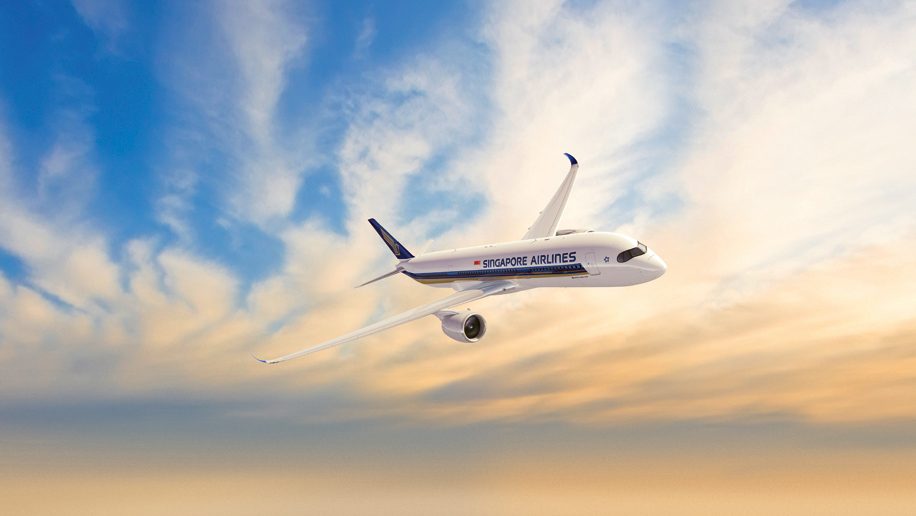
Singapore Changi is one of the most common and convenient connection points for the Maldives. You qualify as a transit passenger if both flights are on the same booking and your checked bags are tagged through to your final destination.
If you stay airside, follow the signs to your next gate and go through security screening before boarding. If you don’t have your onward boarding pass yet, collect it at a transfer desk in the transit area.
If you plan to leave the airport during your layover, or you have to collect bags and check in again (for example on separate tickets), you must clear Singapore immigration and meet Singapore’s entry requirements. Travellers entering Singapore need to submit the free digital SG Arrival Card first. It is not needed if you stay airside in transit.
Vapes and e-cigarettes are illegal in Singapore, and penalties are heavy, so don’t bring them if you will enter the country on a layover.
Flights can arrive and depart from different terminals, so check your boarding pass and the airport screens. Full details are on the Changi transit guide.

Arriving in the Maldives
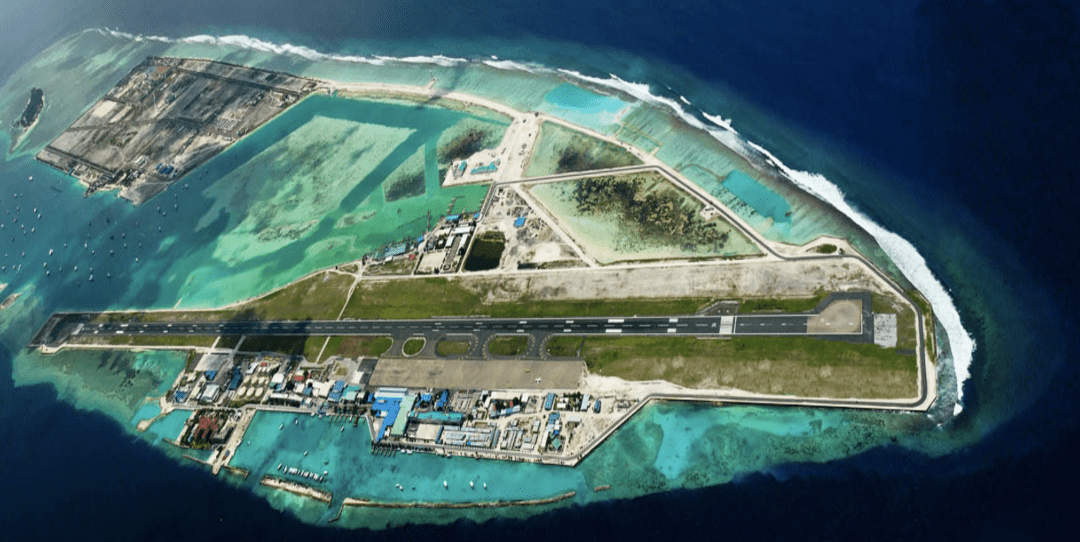
Velana International Airport in Malé is the main gateway to the Maldives. Arriving is usually simple when your declaration is done and your transfers are organised in advance.
Check your travel vouchers for contact details if you have any issues on arrival.

Customs and Prohibited Items
The Maldives has strict import rules that reflect Islamic law. Tourists may not bring in firearms, alcohol, pork products, pornography or idols of worship. Penalties for illegal drugs are severe.
- Alcohol: Do not buy alcohol at duty-free or on your flight. It is confiscated on arrival. Alcohol is available only at licensed resorts and hotels, and on charter vessels.
- Medication: Most medication is allowed with a doctor’s prescription, in the amount you need for your stay. Check that your medicine is legal in the Maldives and carry a copy of your prescription or a doctor’s letter. Cannabis-based products, including CBD, are illegal even with a prescription.
- Tobacco and vapes: Tobacco rules were tightened in November 2024. Tourists aged 18 and over can bring in up to 200 cigarettes, or 25 cigars, or 250 grams of tobacco for personal use. Customs holds anything over the limit until you depart. Vapes are not allowed in and are held by Customs until you leave.
- Camera and dive gear: If you bring a lot of equipment, tell your resort in advance or carry a list with serial numbers. Items left behind may be liable for import duty.
For anything not covered here, contact the Maldives Customs Service.
Check Official Travel Advice Before You Fly
Review the latest advice for your passport and departure country:
- Australian travellers: Smartraveller Maldives
- British travellers: UK Foreign Travel Advice
- United States travellers: U.S. State Department
- Health information: CDC Maldives Travel Health Advice
Travellers on other passports should check their own government’s advice and entry requirements.
Smartraveller currently advises Australians to exercise a high degree of caution in the Maldives because of the risk of civil unrest and the threat of terrorism. Its guidance also covers:
- Dress and conduct: Dress modestly in Malé and on inhabited local islands. Public displays of affection outside resorts can cause offence.
- Ramadan: Resort islands generally don’t need to follow Ramadan rules, but guesthouses on inhabited islands do.
- Medical care: Hospital services are limited and it can take hours to reach a hospital from a resort island. Decompression chambers are limited too.
- Insurance: Make sure your policy covers all overseas medical costs, including medical evacuation.
Power, Currency and Insurance
Power: The Maldives runs on 230V at 50Hz. Sockets vary, with plug types G and D most common and type C also seen, so bring a universal adaptor to cover them all.

Currency: The local currency is the Maldivian Rufiyaa (MVR), but US dollars are accepted at most resorts and widely used in the tourism sector. Most ATMs dispense rufiyaa only. Bank of Maldives has USD ATMs at M. Star Cloud in Malé, Renaatus Ithaa Muiy in Hulhumalé and Velana International Airport, but they can run out of cash or be offline, so don’t rely on them. Bring enough USD cash with you for your trip. Bring newer, clean notes too, as old, torn, marked or damaged US dollar notes are often refused in the Maldives. Most hotels and major tourist facilities accept credit cards.
Green tax: The Maldives green tax is included in Perfect Wave packages.
Travel insurance: Comprehensive cover is strongly recommended. Check that your policy covers your whole journey, including surfing and the transfers on your itinerary.
Final Word
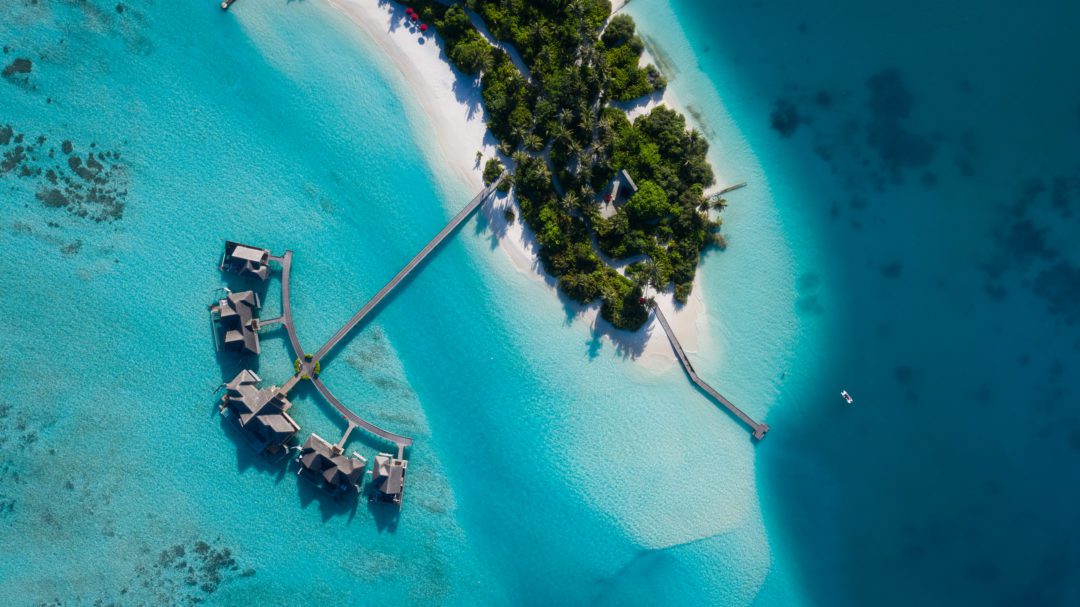
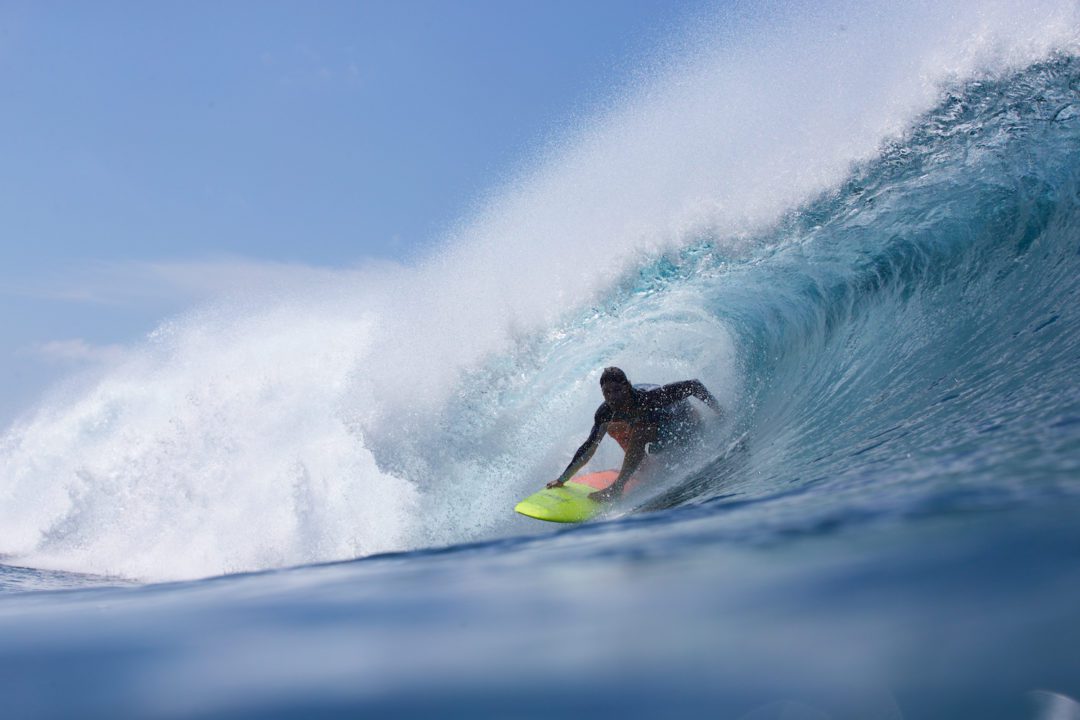
The Maldives is one of the easiest premium surf destinations to reach once you know the basics. Submit your Traveller Declaration within 96 hours of your flight, check your passport and transit arrangements, leave the alcohol behind and read the latest official advice. After that, it’s warm water, tropical islands and some of the best waves on the planet.
 More Like This