




Fiji surf travel guide and waves info
Fiji surf guide
Three main surf regions, the Mamanucas, Coral Coast and Taveuni, with world-famous reef passes like Cloudbreak, Restaurants and Frigates.
Fiji is an incredibly diverse surfing destination, with hundreds of islands and coral reefs facing every direction towards the Pacific Ocean. Unsurprisingly there are regions that stand out for exposure to swell under favourable wind directions.
The three main surf regions are Mamanucas, Coral Coast and Taveuni. Between them they offer surf year-round, best for intermediate and experienced surfers, with lessons and easier waves for beginners at selected resorts.
Ready to pick a resort? Compare our Fiji surf resorts by region, surf level and budget.
What we love
World class surf breaks: Cloudbreak, Frigates, Namotu & Wilkes.
Less crowded waves on the Coral Coast.
Warm water tropical conditions – Best for intermediate+ surfers.
Great range of accommodation types and options.
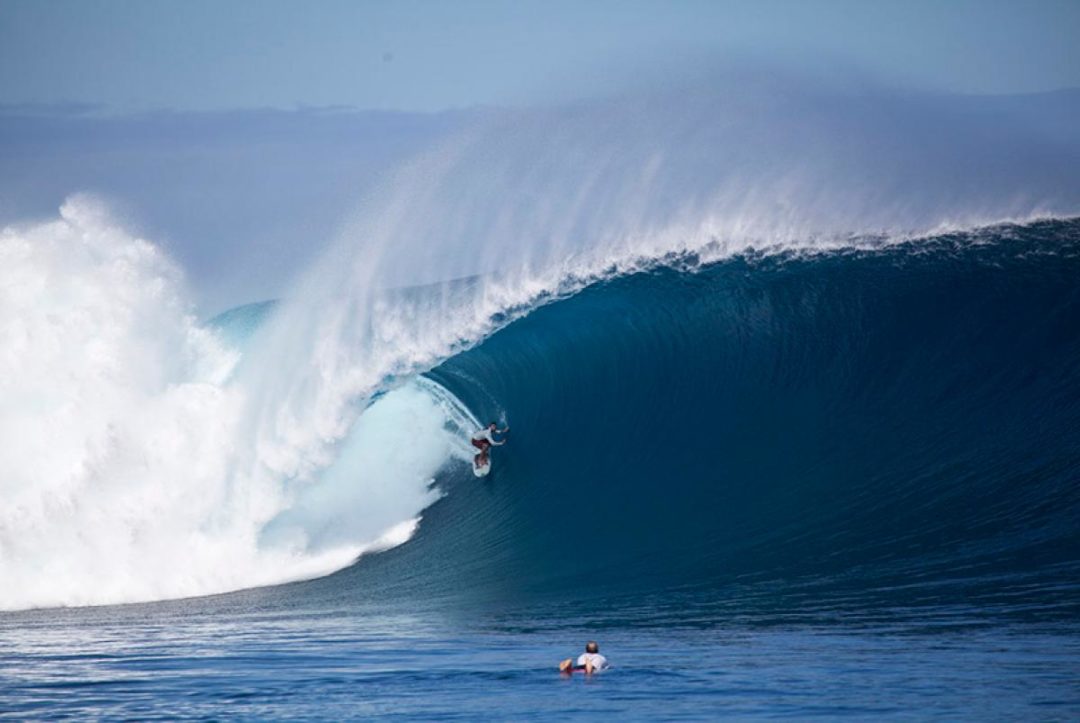
Fiji surf regions at a glance
Mamanuca Islands: south-west of Viti Levu, home to Cloudbreak, Restaurants, Namotu and Wilkes; trade winds are side to offshore at most reefs from May to October.
Coral Coast: Viti Levu’s south coast, from Natadola Beach to Pacific Harbour, with Frigates, Hideaways, J’s and Fiji Pipe; often the place to surf in summer.
Taveuni: SE trade swells and North Pacific groundswells, with Maqai Point, Kavas and Bula Bowls; best from November to April.
Seasons are typical patterns, not forecasts: talk to us about conditions before you book.
Mamanuca Islands surfing
This archipelago and series of barrier reefs to the South-West of the main island of Viti Levu is the definition of the Fijian surfing experience. The geography has been kind, with the SW groundswell marching out of deep water and peeling down perfectly oriented coral reefs such as Cloudbreak, Restaurants, Namotu and Wilkes. Importantly, the trade winds blow side to offshore at most reefs through the peak swell season of May to October. While most surfers have seen plenty of photos of huge, perfect waves at outer reefs like Cloudbreak, the area offers a great variety of breaks. When the swell is large at Cloudy, it’s usually half the size and ruler-lines of perfection peeling down reefs like Restaurants and Swimming Pools.
The Mamanucas are also a year-round surf destination. Although the biggest SW swells come out of the Tasman Sea during the Southern Hemisphere winter months, there are often mid-sized swells from the SW around to the SE during the summer months. At this time winds are often light and variable, with glassy conditions and many other breaks turning on with the lack of wind.
Cloudbreak
Mamanuca Islands
One of the world’s best lefts which is fun and performance oriented at three foot, but serious at six foot. Multiple barrel sections and power to burn.
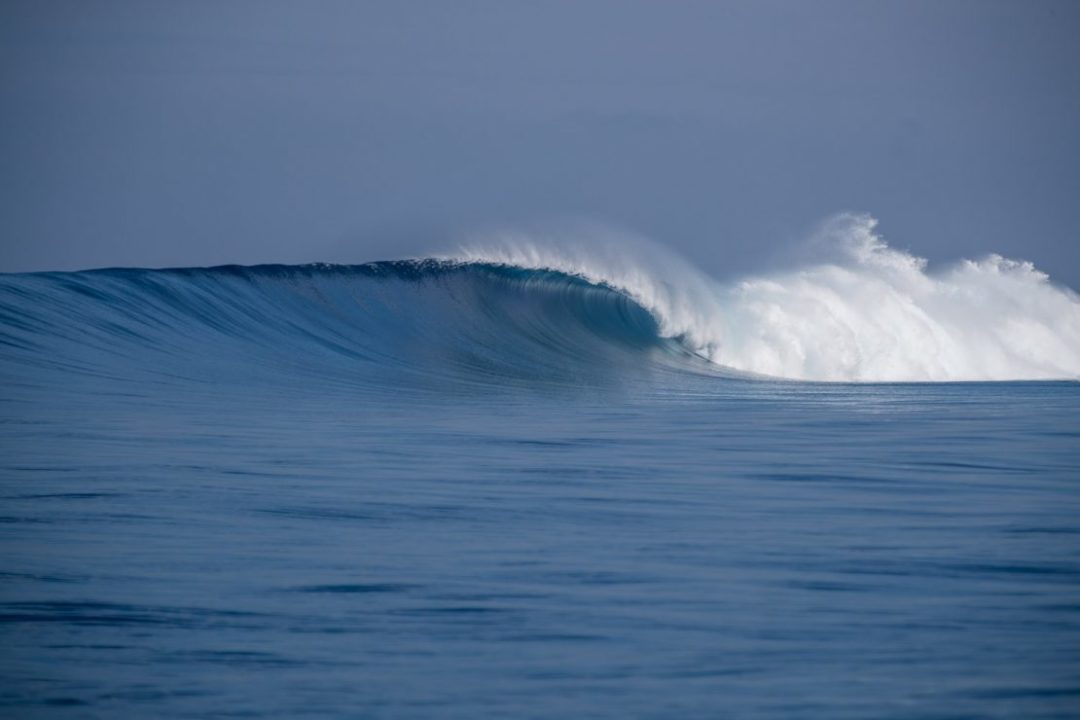
Wilkes Pass
Hollow and fast right hander, best on higher tides. Gets plenty of groundswell from the SW year round. Exposed to prevailing trade winds from ESE which blow onshore on the Rights like Wilkes from May to October. Best season at these rights is when winds are often light and variable during southern summer months (Nov – April).
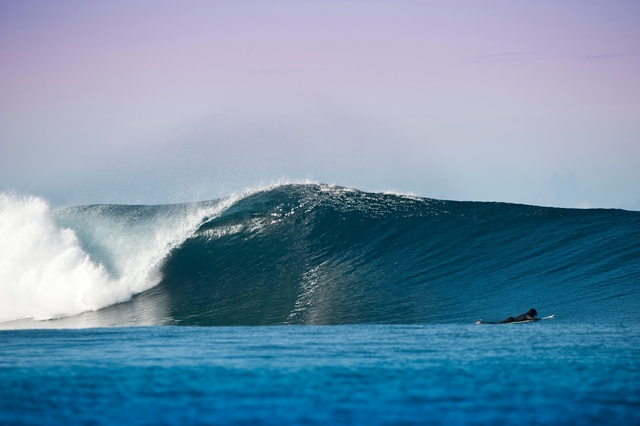
Namotu Left
Classy left exposed to SW groundswells. While not as heavy as Cloudbreak, Namotu still gets plenty of swell and can provide long walling left at all sizes with occasional barrel sections. Side to offshore in the prevailing ESE trade winds when the swell is most consistent in the southern winter months of May to October. Namotu is a year round wave and can be excellent when wind is light and variable from November to April and SW groundswells and SE swells occasionally pulse. Watch out for strong currents on the outgoing tide!
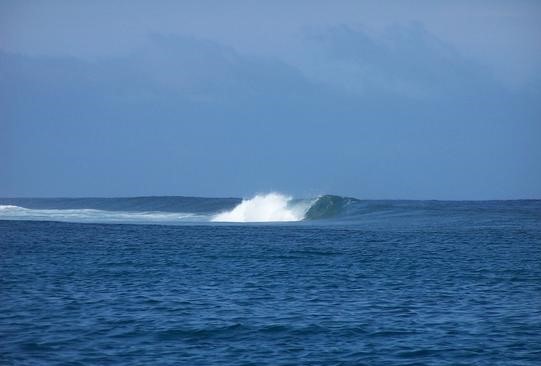
Mini Cloudbreak
Mamanuca Islands
Powerful, fast wave. The best wind direction is south-east. Best around high tide.
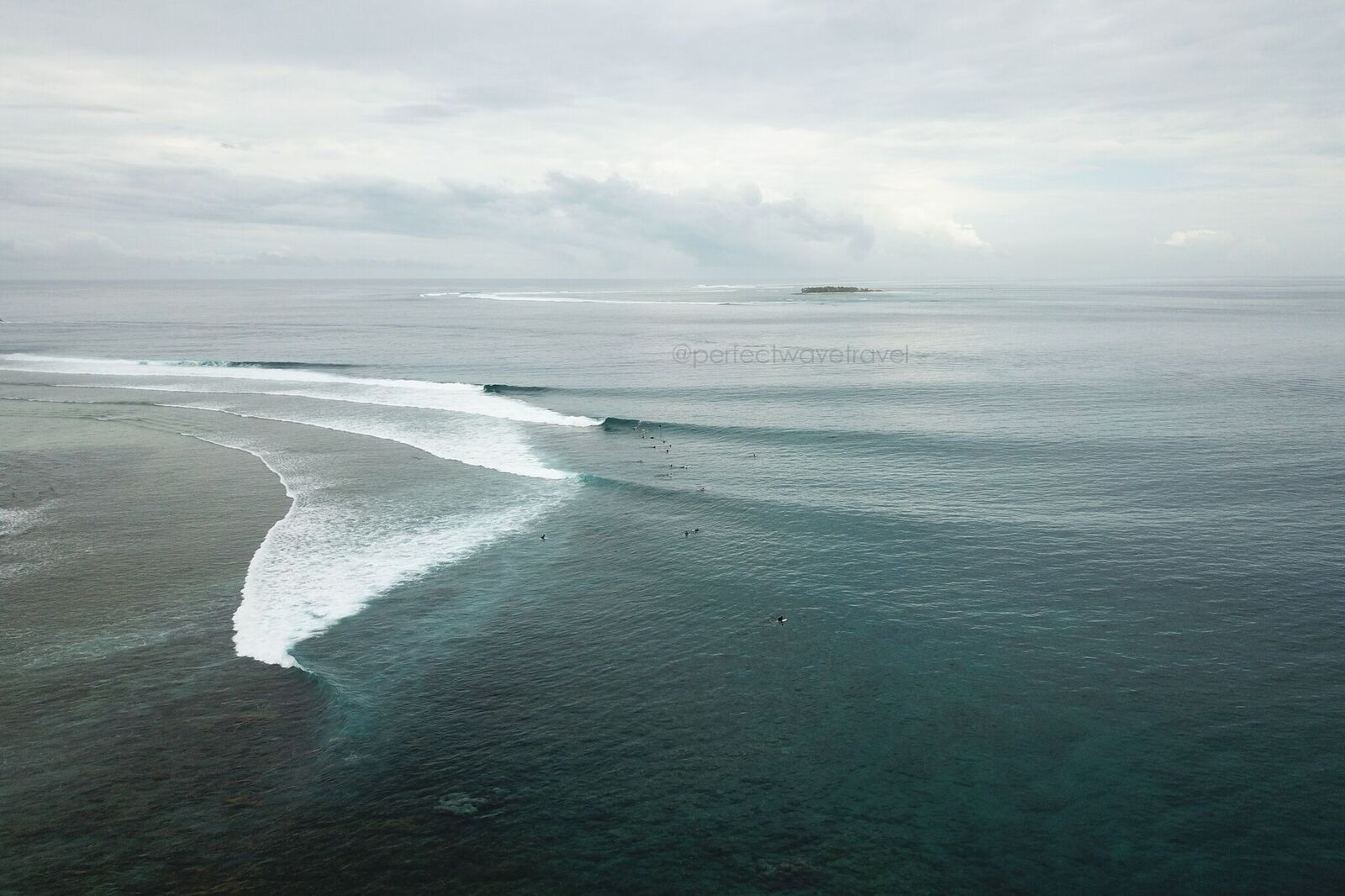
Restaurants
Long, hollow super-quick left in front of Tavarua Island. The Walls go on forever, try and keep up. Best with solid SW groundswell – when Cloudbreak is huge, Restaurants is often epic at half the size! Offshore is ESE trade winds during winter months when swells are most consistent. The strong swells required for Restaurants to break properly are less frequent, even rare in the summer months from November to April.
Where to surf on the Fiji Coral Coast?
This region is the South Coast of Viti Levu, from Natadola Beach east to Pacific Harbour and the Beqa lagoon. Enjoying much of the same exposure to SW groundswell as the Mamanucas, the Coral Coast offers some incredible waves including Hideaways (Right) and the many reefs around Matanivusi and Waidroka Bay resorts. These south-facing reefs can be affected by the trade winds blowing side-onshore on the right handers from May to October. However, offshore lefts like Frigates Pass are a lot like Cloudbreak in the way that they get all the swell and are straight offshore in the trade winds. During the summer months, the Coral Coast is often the place to surf, with consistent SE trade swell, pulses of SW groundswell and light variable winds ensuring all breaks are glassy.
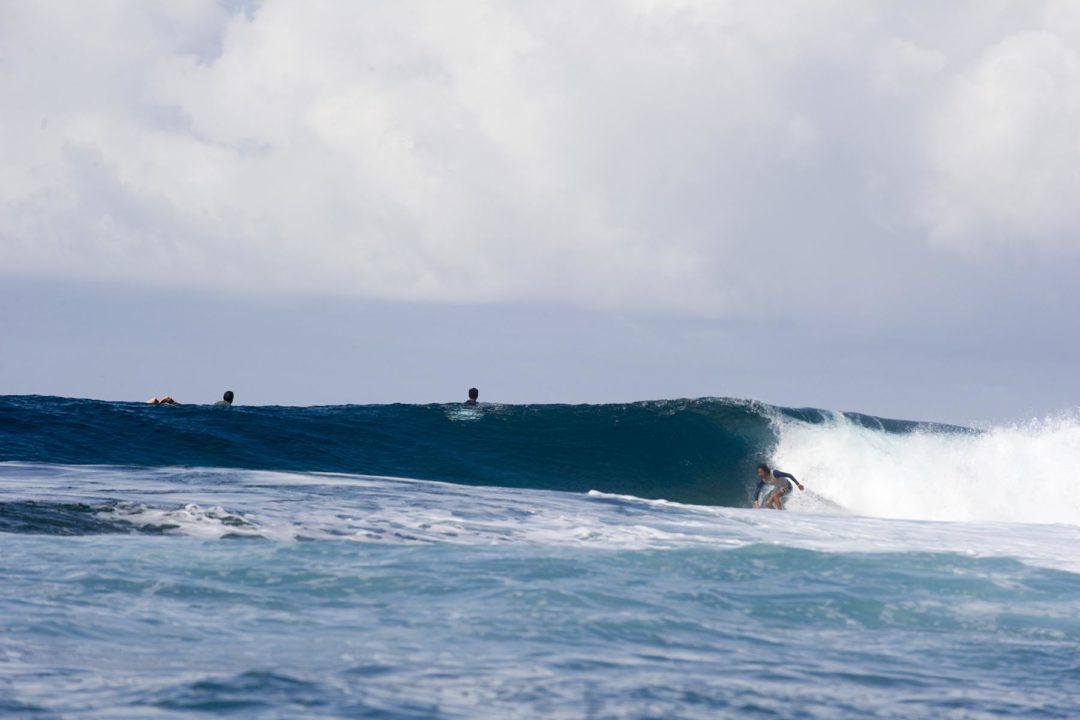
Hideaways
Coral Coast
Hideaways is a right hand reef break, only a short paddle in front of Hideaway Resort. It’s a hollow, fast, ledgey barrel, but only good around high tide. Starts working at less than 3ft and holds up to 6ft plus. Year-round wave, although it is more consistent from May to October. Side-onshore in tradewinds so best when winds are light. Recommended for experienced surfers only.
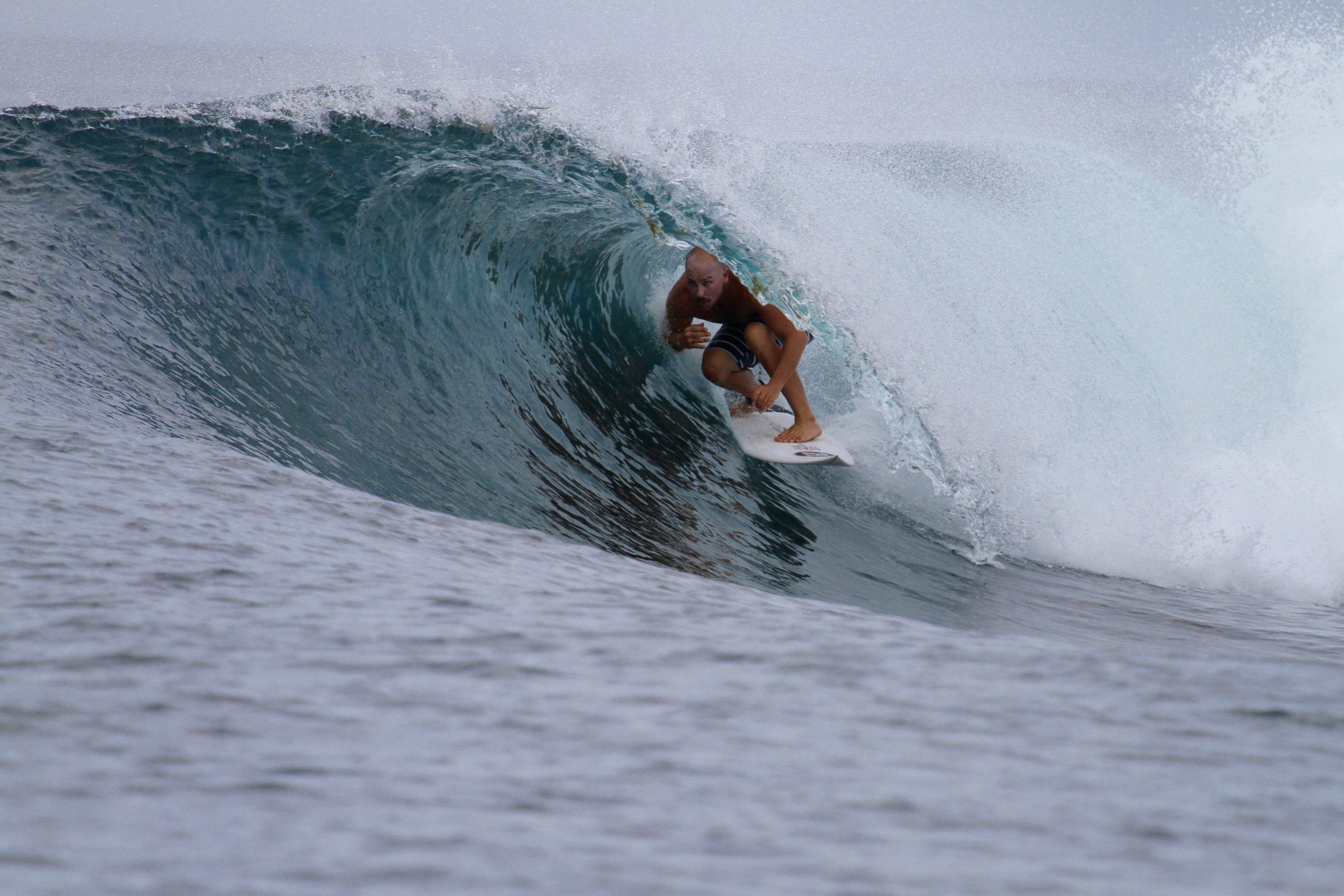
J’s
Coral Coast
J’s is a hollow, fast wave that breaks from 2’ to 6’. It’s best around the high tide with winds from NE to W. It needs some west in the swell to run down the reef.
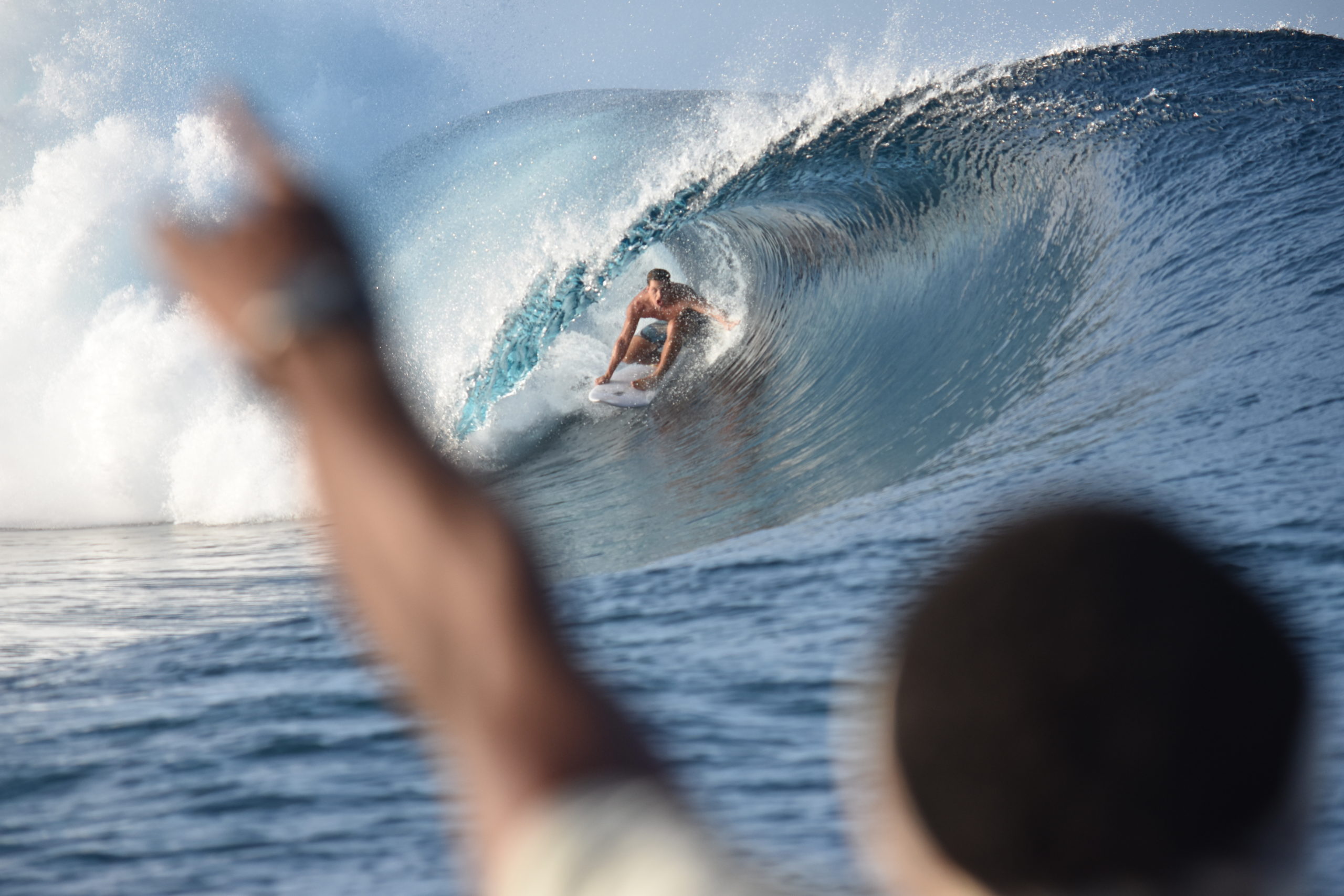
Fiji Pipe
Coral Coast
This hollow left hand barrel breaks with swell in the 2-6ft range. Short fast and powerful this wave is also offshore in a SE trade wind direction, which is dominant in the winter season March to November.
Shifties
Coral Coast
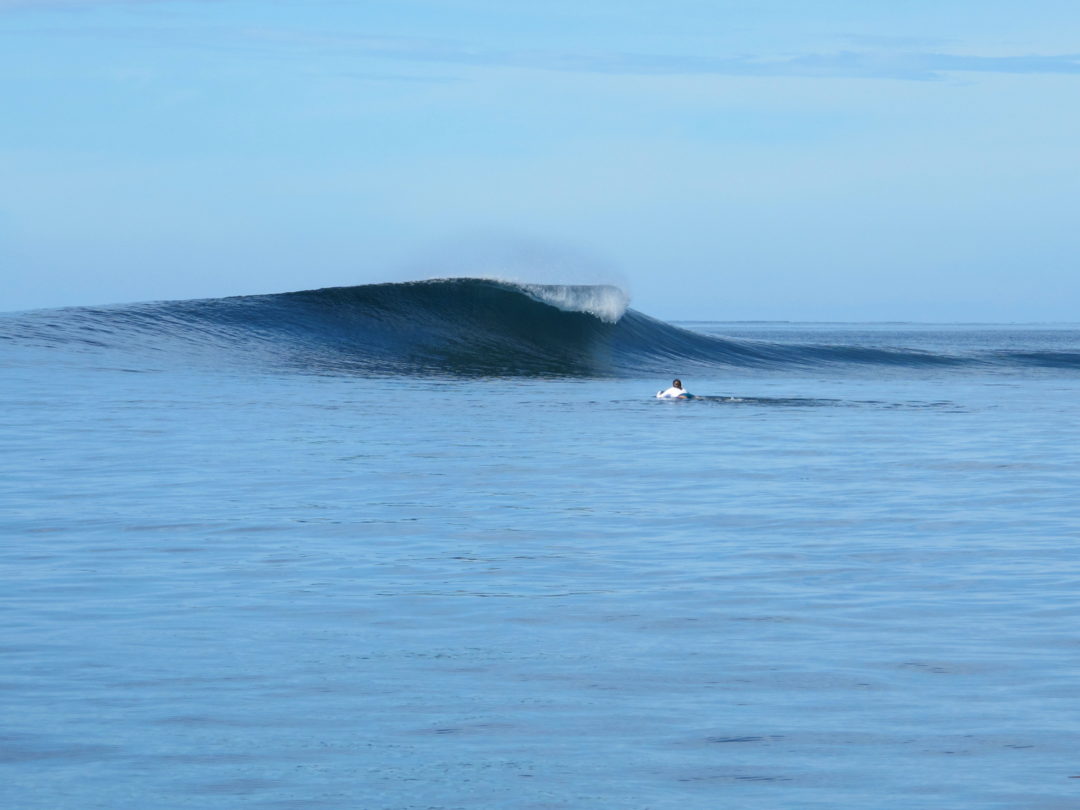
This wave has a deep water take off making the break a ‘not too threatening’ ride. This outside point of the barrier reef picks up all the swell and can be double the size of J’s and Vunaniu. It is powerful and thick. When everywhere else is flat, you can almost guarantee a 4-foot wave at Shifties. It can be surfed at all tides. Again, a wind of the north quadrant is needed.
Frigates
Coral Coast
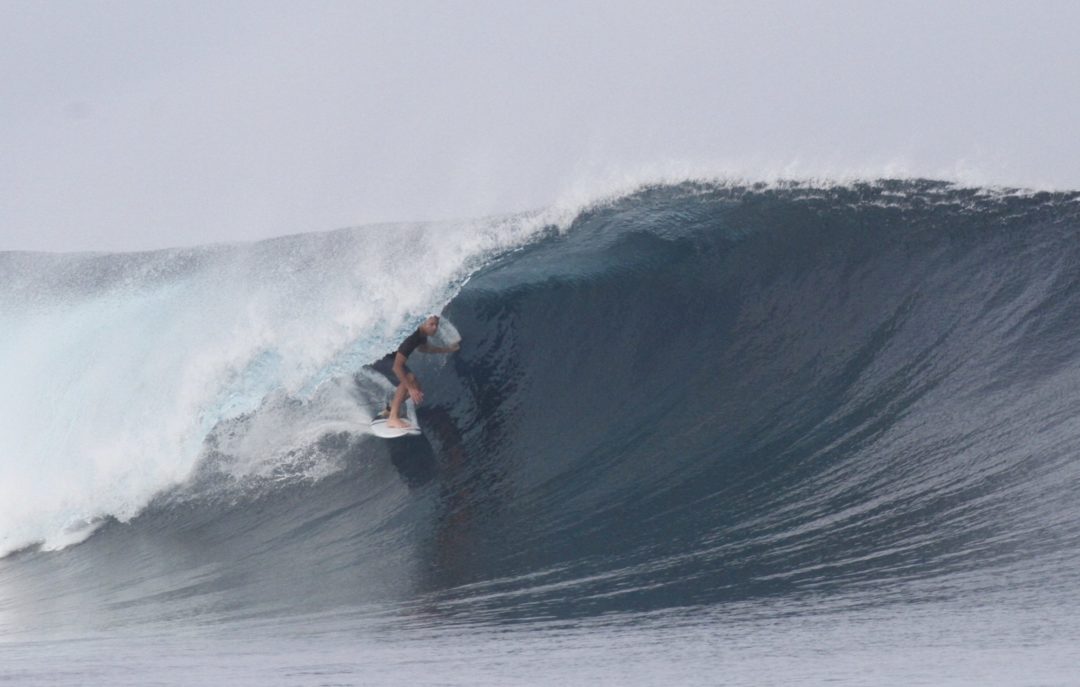
World-class left that can rival Cloudbreak for power, size and consistency. A gradual tapering reef means it can handle all swell sizes. Located offshore, a 45 minute boat trip is required from South Coast resorts.
Serua Right
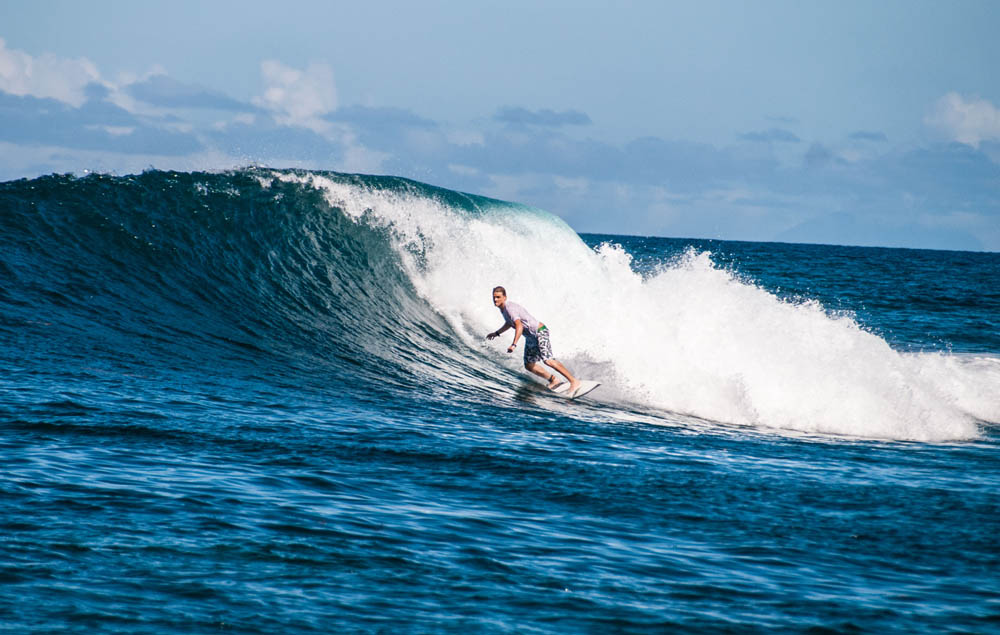
Great long right-hand break. Mellow take off going into hollow inside section. On medium days this is one of the longest rights surfing in Fiji offers. Works almost at all tides. Waves begin to break on the outer reef and peels into deeper water.
Black Rock
Coral Coast
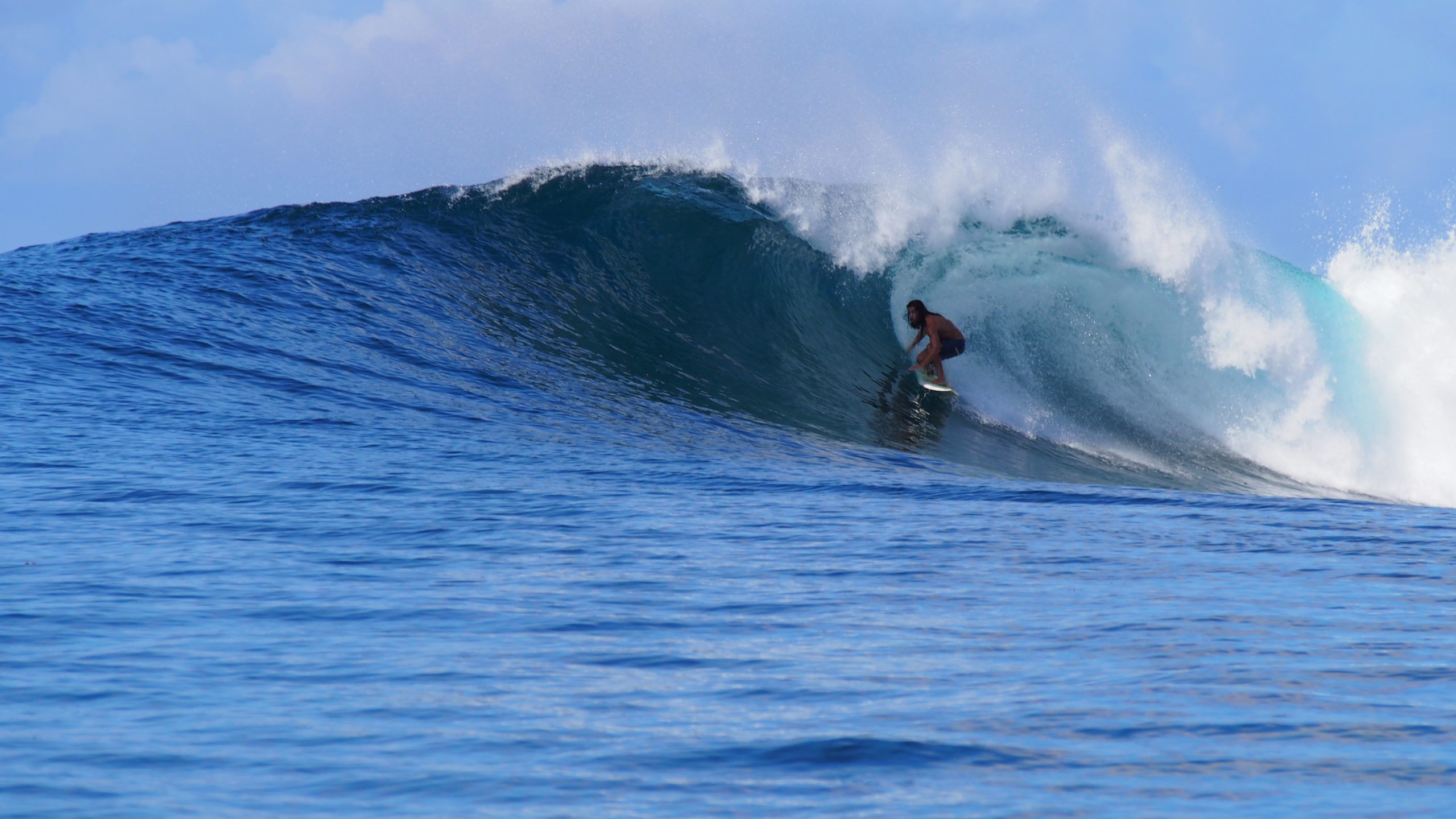
A right hand barrel which can be tricky at take-off, but can produce the ride of a lifetime. Best around high tide due to the quite shallow coral reef close to take-off zone. Breaks at the entry of a passage which can pick up large swells.
Where to surf at Taveuni?
Located in the north-east of Fiji, Taveuni is a totally different destination to the high-profile Viti Levu regions. With exposure to both SE trade swells and North Pacific groundswells, the Taveuni region offers a great variety of waves and options. The optimal surf season in this region is actually the southern hemisphere summer months (Nov – April), when winds are often light or slack and the reefs offer glassy waves. The swells can come from the North Pacific as both longer period groundswells or mid period trade swells from the other side of the equator. At the same time SE swell can push up from both trade winds and low pressure systems east of New Zealand
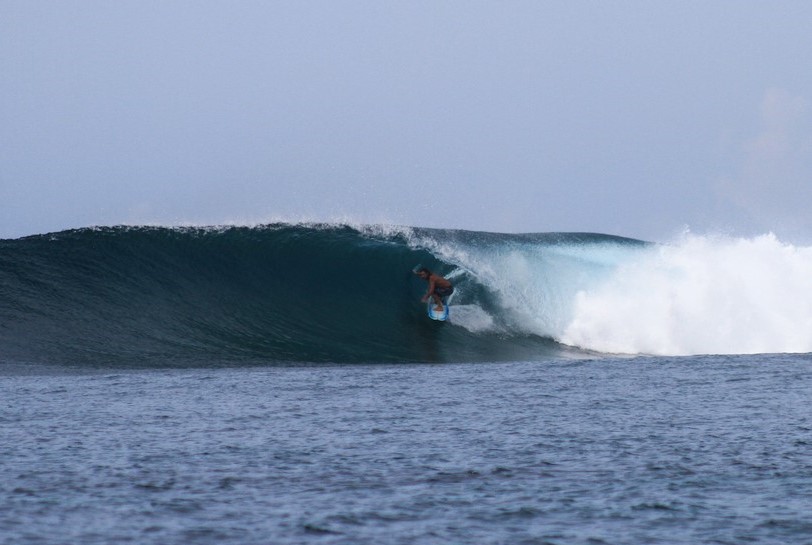
Maqai Point
Taveuni
Long world class wave that works on all tides, can offer barrels, rippable walls and is suitable for intermediate to advanced surfers. Can be surfed from small to huge. Prefers winds out of North quarter
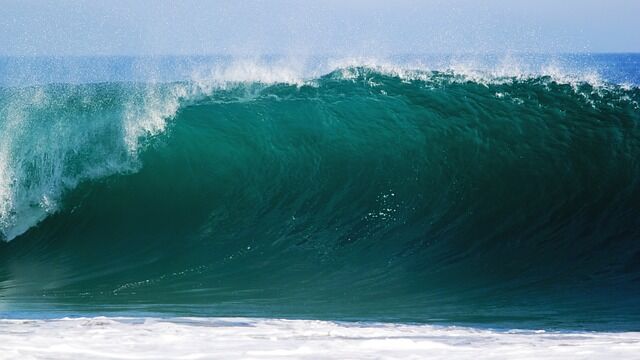
Kavas
Taveuni
Fast, occasionally hollow left for experienced surfers. Works in ESE trade winds so a good option during southern winter months. Best on higher tides
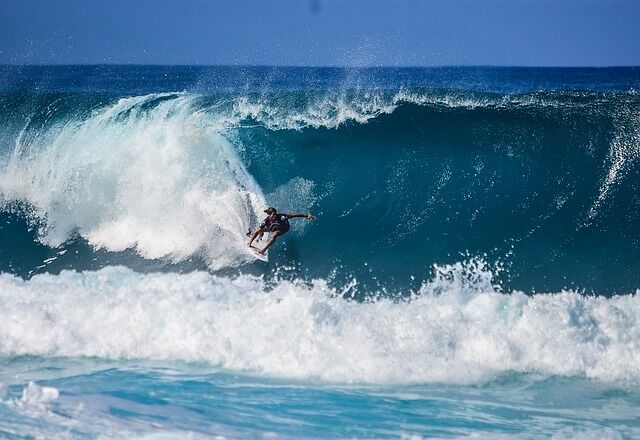
Bula Bowls
Taveuni
Long, user friendly left in smaller swells. Can offer big barrels on larger groundswells. Handles winds from east to north so can be an option in winter trade winds
Fiji surf breaks by level
Many of Fiji’s famous breaks are heavy reefs, but there are gentler waves and lessons for newer surfers.
Beginners: surf lessons at Natadola Beach (InterContinental Fiji) or with Tropicsurf at Six Senses Fiji, and easier waves from Plantation Island, Waidroka Bay and Musket Cove.
Intermediate: Namotu Left’s long walls, Bula Bowls in smaller swells, Shifties’ deep-water take-off and Maqai Point.
Experienced: Cloudbreak, Restaurants and Frigates, plus Kavas and the hollow reef barrels at Hideaways and Fiji Pipe.
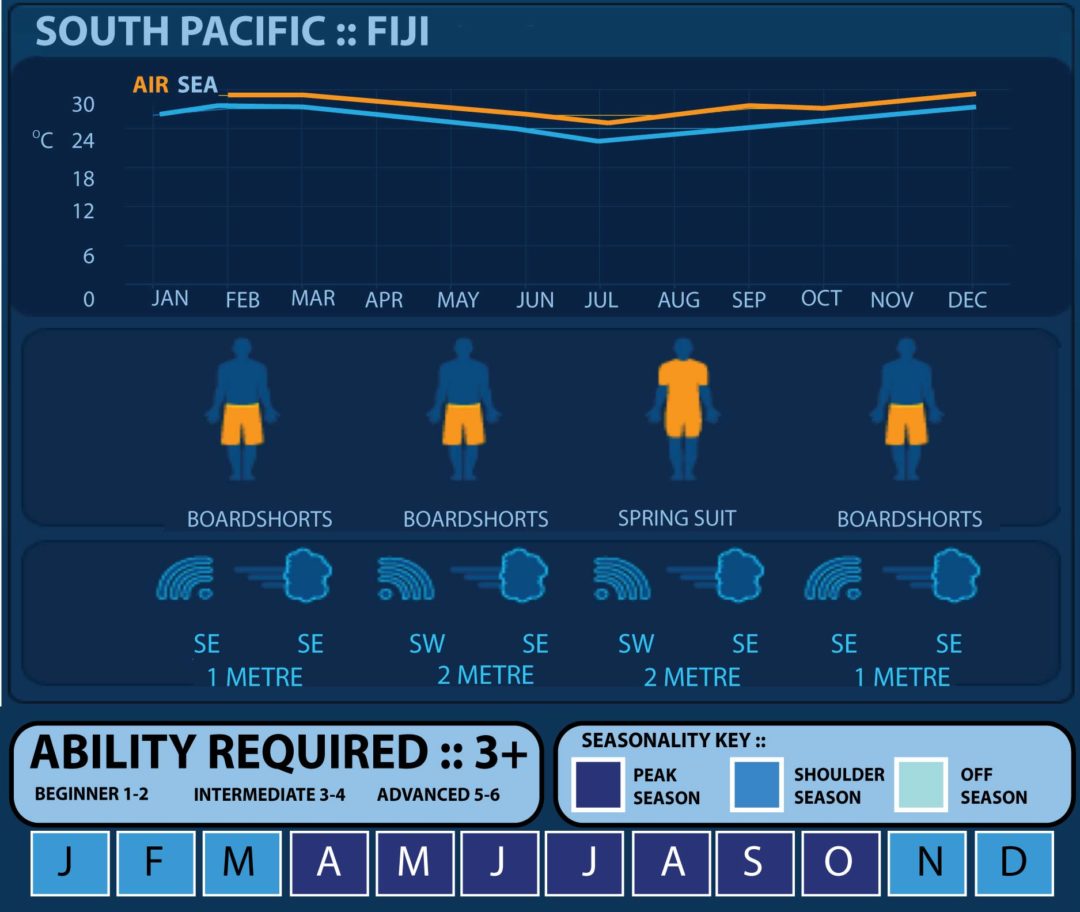
When is the best season to surf in Fiji?
April to October is generally the best time for surfing Fiji as the southeast trade winds blow cross/offshore and low-pressure systems in the Tasman Sea provide consistent SW swells. Despite relatively minor tidal ranges, most reefs are very shallow and are affected by low tide, while water temperatures sit at a balmy 27-28°C all year round. The southern summer months enjoy light and variable winds, opening many more waves that suffer under the trade winds.
Attractions
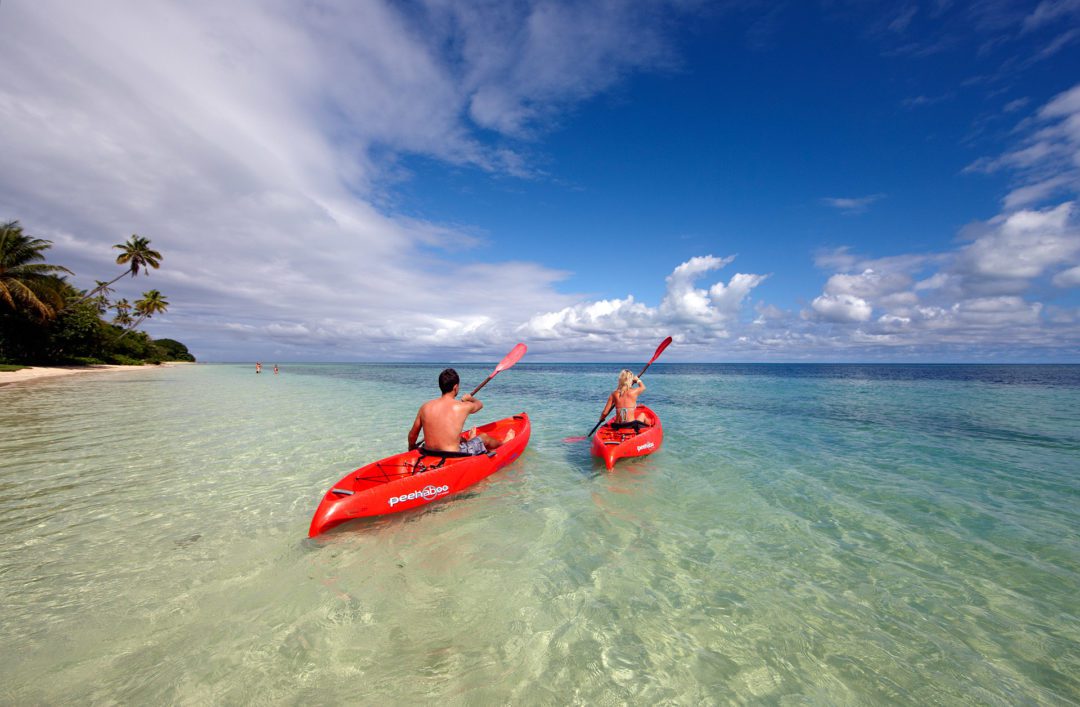
Fiji is most famous for its palm-lined beaches and crystal-clear waters, however there’s more to this vast archipelago than great waves. From zip lining over a rainforest, to horseback riding on the beach, to stumbling upon a hidden waterfall or visiting a Fijian village and drinking Kava with the locals this is a country that always opens its arms and its beautiful environment to all guests.
The Country
Fiji has one of the most developed economies in the Pacific, but since independence from Britain in 1970, after a century of rule, it has seen some political instability, mainly due to tension between the indigenous Fijian and ethnic Indian communities. The archipelago consists of some 300 islands, although only 100 are inhabited. The locals are known for their hospitality, and tourism, along with sugar, is the biggest industry.
Getting There
Nadi International Airport, on Viti Levu, is the main airport, a four-hour flight from Australia. Many international visitors come via New Zealand, a three-hour flight away. Airlines with regular flights to Nadi include Air New Zealand, Fiji Airways and Qantas.
Travel Information
Time Zone
UTC +12
Currency
Fijian Dollar
Calling code
+679
Electric
240V
 Where to stay in Fiji for a surf holiday?
Fiji Surf FAQs
Quick answers to the questions we hear most about surfing Fiji. Tap a question to open it.
In the Mamanuca Islands: Cloudbreak, Restaurants, Namotu Left, Wilkes Pass and Mini Cloudbreak. On the Coral Coast: Frigates, Hideaways, J’s, Fiji Pipe, Shifties, Serua Right and Black Rock. At Taveuni: Maqai Point, Kavas and Bula Bowls.
It depends on the region. In the Mamanucas the biggest SW swells arrive in the southern winter, and trade winds blow side to offshore at most reefs from May to October; the summer months bring mid-sized swells and light, variable winds. The Coral Coast is often the place to surf in summer, and Taveuni is best from November to April, when winds are often light.
Yes, if you choose the right resort and time of year. Many famous breaks are heavy reefs, but InterContinental Fiji has surf lessons at Natadola Beach, Tropicsurf teaches at Six Senses Fiji, and Plantation Island, Waidroka Bay and Musket Cove can reach easier, more playful waves when conditions are right.
For Cloudbreak, Restaurants, Namotu and Wilkes, stay in the Mamanucas: Six Senses Fiji, adults-only Lomani Island Resort, Castaway Island, Musket Cove or Plantation Island. On the Coral Coast, Matanivusi has 7 reef breaks including Frigates, and Waidroka Bay has reef passes 10 to 15 minutes by boat. At Taveuni, Qamea Resort has 3 main breaks 15 minutes by boat. See our Fiji surf resorts.
Fly into Nadi International Airport on Viti Levu. Musket Cove and Plantation Island are on Malolo Lailai, west of Nadi: Musket Cove guests take the Malolo Cat from Port Denarau, and Six Senses Fiji is reached by helicopter or fast boat. From Malolo Lailai, Cloudbreak and Restaurants are about 20 minutes by boat. On the Coral Coast, Frigates is around 20 km offshore and usually a full-day boat trip.
It depends where you go. The Coral Coast has less crowded waves, and at Taveuni crowds are very thin from November to April. Ask us which Mamanuca resorts suit your dates.
Enquire
Disclaimer - The trip booked is operated by independent operator(s) and is not part of or in partnership with Perfect Wave Travel. Perfect Wave Travel acts as an agent only. We sell various travel related products on behalf of numerous transport, accommodation and other service providers, such as airlines, land based accommodation and boat charter operators. Perfect Wave Travel obligation is to make travel bookings on your behalf and to arrange relevant contracts between you and travel service providers. Perfect Wave Travel has no responsibility for these services nor do we make or give any warranty of representation regarding their standards. All bookings are made subject to the terms and conditions and limitations of liability imposed by these service providers.
Terms and Conditions - All bookings are subject to Terms & Conditions. By submitting this booking form you have confirmed that you accept and will be bound by these terms.
Award Winning
World Class
Customer Service
Global Company
Multiple Locations
Around The World
Traveller Care Guarantee
24/7 Worldwide
Emergency Support
Perfection Pass
The World's First
Surfer Loyalty Program
Best Price Guarantee
Find A Price Cheaper
And We'll Match It!
Real Surfers.
Real Advice.
Find A Price Cheaper
And We'll Match It!
Travel With Purpose
Find A Price Cheaper
And We'll Match It!