




Maldives Surf Guide: Best Seasons, Waves & Trips
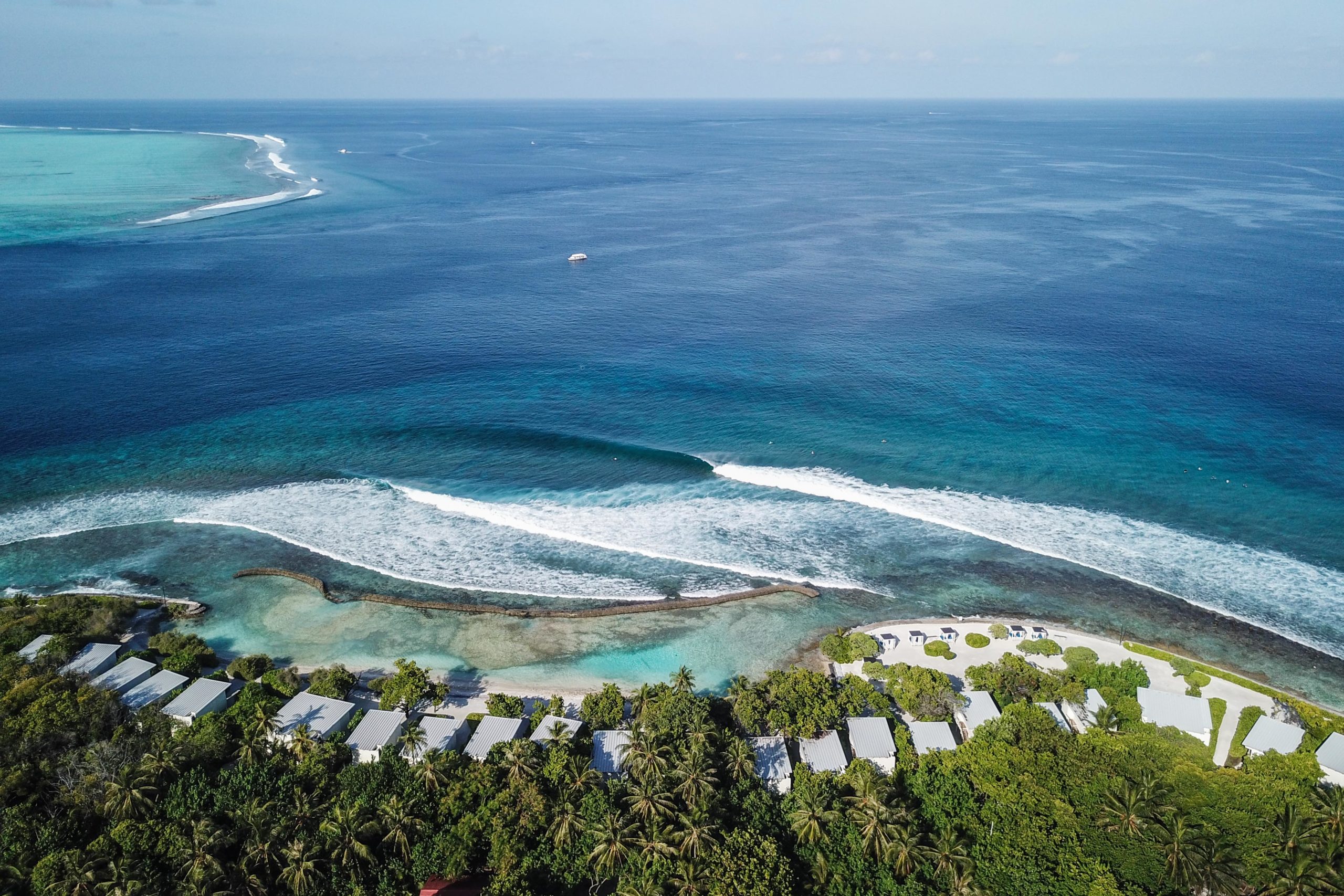
GalleryPlanning a Maldives surf trip starts with choosing the right region, season and way to reach the waves. This guide covers the Malé, Central, Southern and Northern Atolls, with advice on surf breaks, ability levels, resorts and charters. Start with the season and region comparisons below, then explore the options that suit your trip.
Browse Maldives surf resorts HERE
Browse Maldives surf charters HERE
What we love
Huge variety of amazing resort and boat options, from excellent value budget to unbeatable luxury
South Male Atoll is great for beginners and learners, as much as it is suitable for experienced surfers.
Southern Maldives is remote and uncrowded, with great waves for intermediate and advanced surfers, including heavy Beacons
Stunning, luxurious resorts situated perfectly to access loads of nearby surf breaks, including many with a wave directly out front
Which Maldives Surf Region Should You Choose?
The right choice depends on when you can travel, how you like to surf, who’s coming with you and how much travel time you want. These suggestions assume you’re travelling in the right season for that region.
- North and South Malé Atolls;
- Central Atolls (Meemu, Thaa, Dhaalu, Laamu);
- Southern Atolls (Gaafu Dhaalu, also called Huvadhoo);
- Northern Atolls (Baa, Raa, Noonu, Lhaviyani).
April to October for the Malé Atolls, prime from June. The Southern Atolls are best from February to April and September to October, when the winds are cleaner, with March prime.
Reef passes with long, peeling lefts and rights, from fun walls for intermediate shortboarders and longboarders to heavy barrels such as Beacons.
Stay at a resort with a wave out front or boat transfers to nearby breaks, join a surf charter that follows the swell, or stay on a local island.
Velana International Airport in Malé (MLE). The outer atolls are reached by domestic flight, seaplane or boat.
Around 28°C all year.
Some guides use “northern” to mean North Malé Atoll. We don’t. In this guide, North Malé is part of the North and South Malé Atolls, close to the airport. The Northern Atolls are Baa, Raa, Noonu and Lhaviyani, further north. That area is largely unexplored, with 13 named breaks on Baa Atoll, of which only four are surfed regularly.
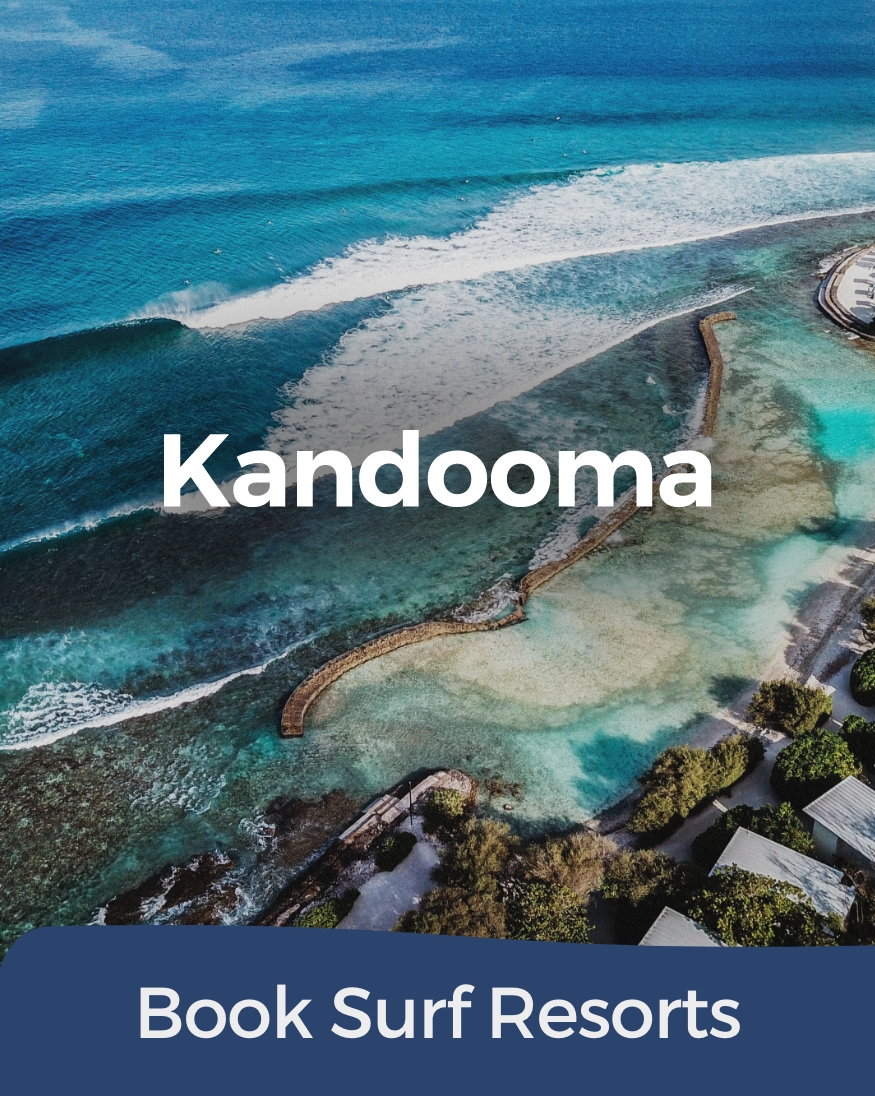
A resort with a wave out front or a short boat ride away usually works best. In South Malé, Kandooma has a right-hand point break steps from the villas plus scheduled boat trips to nearby breaks, with a spa, diving and snorkelling for your partner. COMO Cocoa Island has overwater villas and a guided surf pass. In the Central Atolls, Niyama’s Vodi is a quality left you can paddle out to at any time, and Six Senses Laamu pairs Ying Yang and other Laamu breaks with an extensive non-surfing programme. Club Med Kani in North Malé is all-inclusive, with the beginner and longboard-friendly Ninjas off the north end of the island.
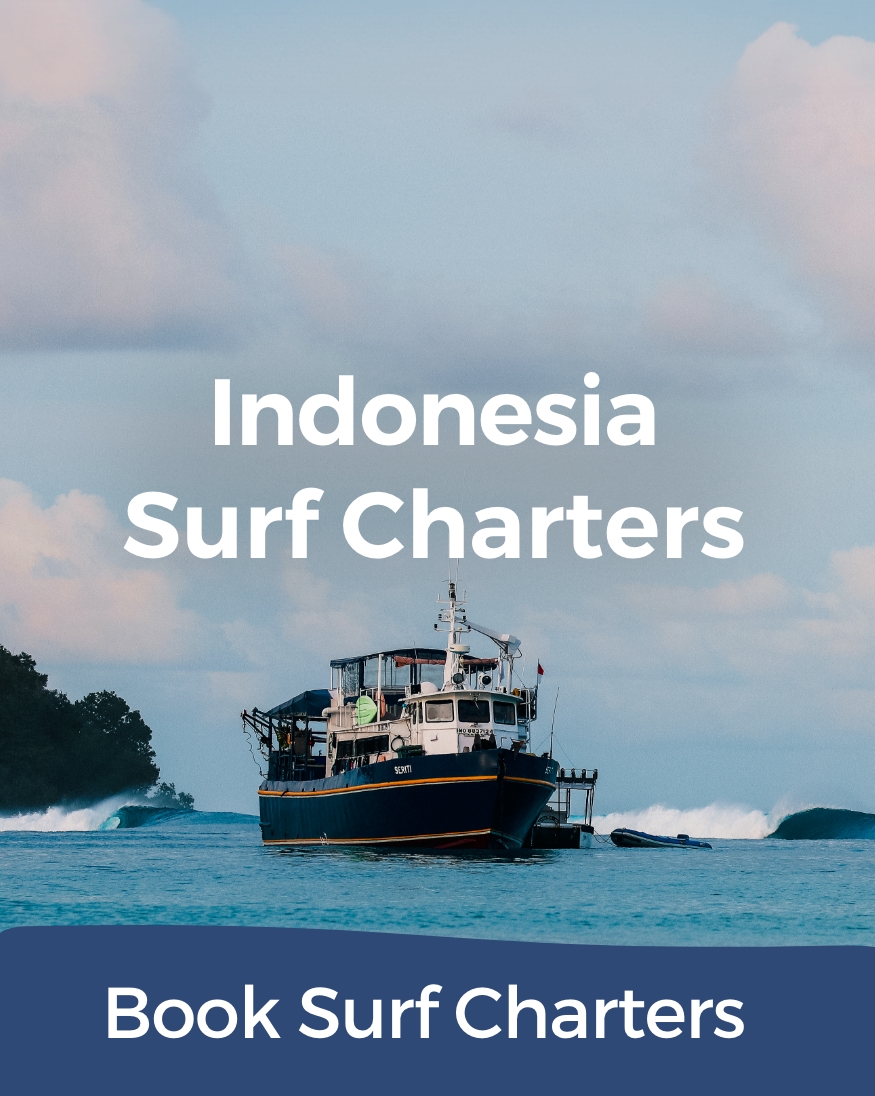
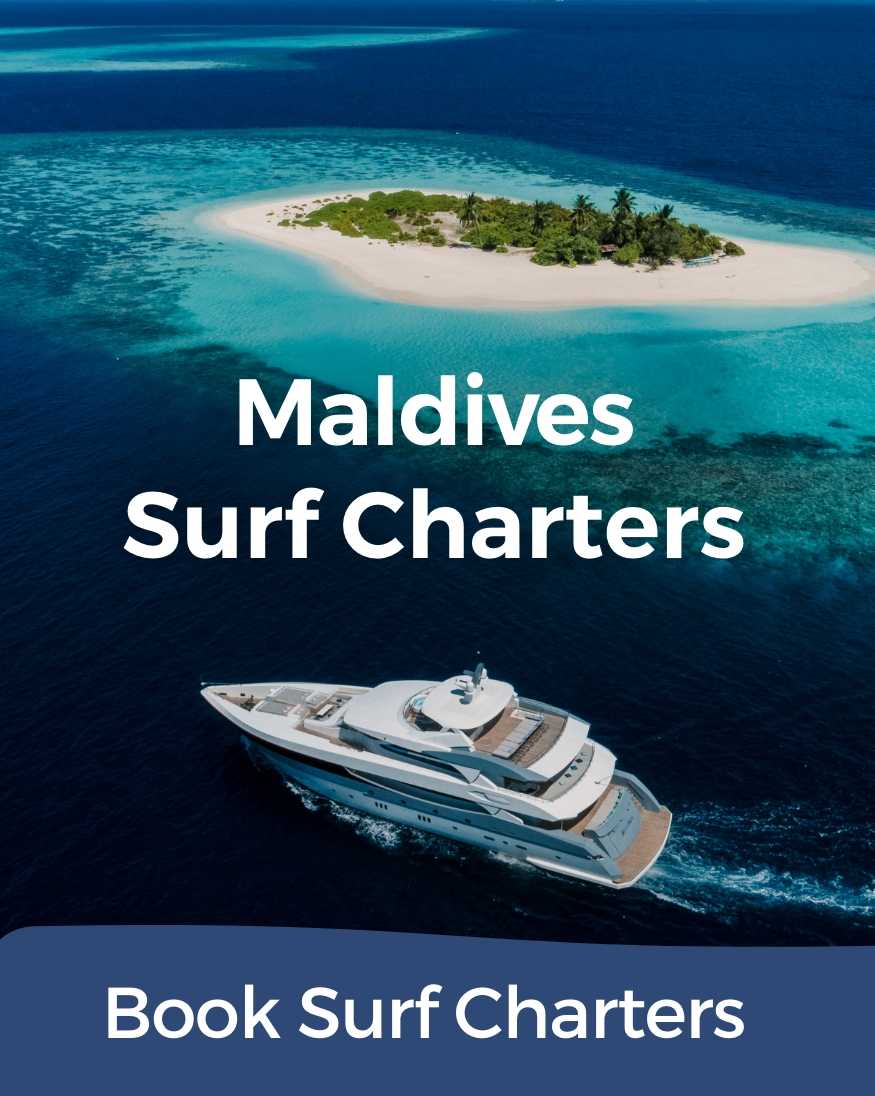
Charters suit groups who want to follow the swell. In the Malé Atolls’ main season (April to October), boats such as Gurahali, Island Safari, Keana, Carpe Diem, Carpe Vita, and Sea Rex work the wave-rich Malé Atolls, and Carpe Vita can also be booked for the Central Atolls. Island Safari and Gurahali offer itineraries across the Malé, Central and Southern Atolls. The Southern Atolls are best chartered in the February to April and September to October wind windows. Surf Sojourn is a smaller, value-focused boat that explores further afield, including the Northern Atolls. Individuals can join an open charter, or a group of as few as four can charter the boat.
Look for kids’ clubs, beginner-friendly waves and easy transfers. Kandooma has a kids’ club free for ages 4 and over, a learn-to-surf break, sandbank lessons and family villas. Niyama has the Explorers Kids Club, Six Senses Laamu has The Den for ages 3 to 12, Ayada has the Zuzuu Kids Club, Club Med Kani welcomes children over 24 months, and InterContinental Maamunagau has a surf academy for kids.
The Southern Atolls are home to Beacons, the Maldives’ gutsiest wave, plus Tiger Stripes and Five Islands, best in the wind windows. In the Central Atolls, look at Ying Yang, Machines, Sarongs and Malik’s. In the Malé Atolls’ peak season, Cokes and Tucky Joes deliver heavier, hollower rides. Kandooma Right on its day delivers long, hollow rides and has been loved by surf pros such as Shane Dorian, Barton Lynch or Ace Buchan. In the Northern Atolls, Dhravandhoo Right is for intermediate to advanced surfers only and Kudadhdhoo is considered world class; both need strong, long-period swells.
The outside section at Quarters (South Malé) is a fat, slow, meandering wave perfect for longboards, Riptides (South Malé) has carvable walls, Ninjas (North Malé) is a slow right-hander, Muli Outside (Meemu) is especially fun on a longboard and Veyvah (Meemu) has an easy take-off. Maldives domestic flights currently allow surfboards up to 7 ft including the board bag, so if you’re heading beyond the Malé Atolls, ask us about board hire.
The North and South Malé Atolls are closest to the airport. Kandooma is 40 to 45 minutes and COMO Cocoa Island about 40 minutes by speedboat and Club Med Kani is about 20 km from Malé. Further afield, Soneva Fushi in Baa is a 30-minute seaplane flight, Six Senses Laamu is a 65-minute seaplane flight, and Maverick in Laamu is a domestic flight plus a 20-minute boat ride.
Best Surf Breaks in the Maldives
North and South Malé Atolls
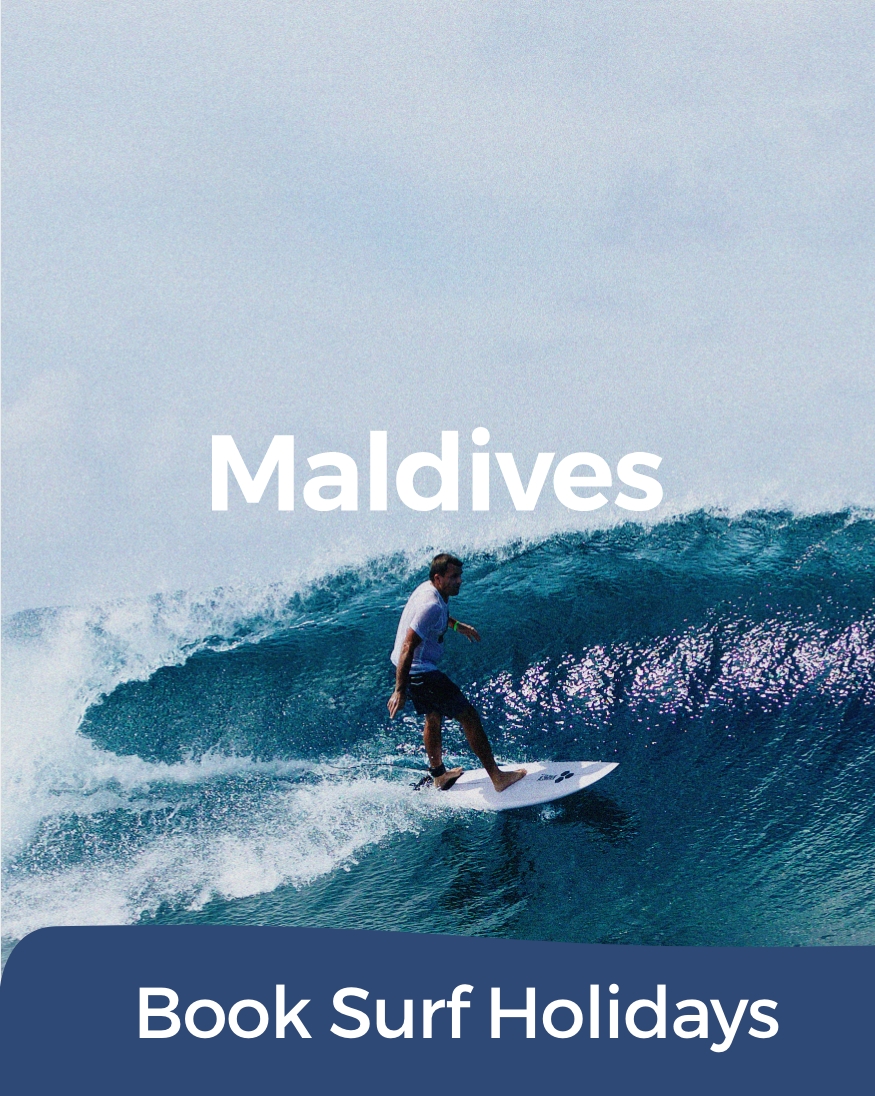
The Male’ Atolls of the Maldives is a perfect destination for a surf adventure or family holiday. Be it beautiful resorts with a wave out front, or a surf charter with a group of friends, these Atolls offer an experience for both surfers and non-surfers that is unrivaled. Experienced surfers love to come here to score quality waves in the peak season, while intermediate short board and long board surfers will find long, fun, peeling rights and lefts. North Male has some of the best Maldivian surf breaks including Chicken’s, Cokes and Lohis. While in South Male, Kandooma Right and Foxeys are just two of the world class waves in this magical part of the Indian Ocean.

Kandooma Right
South Male

Quarters
South Male

Natives / Foxys
South Male

Tucky Joes / Boatyards
South Male

Riptides
South Male

Cokes
North Male

Chickens
North Male

Ninjas
North Male

Jails
North Male

Sultans
North Male

Honkeys
North Male
One of the most consistent waves of North Male Atoll off the island of Thanburudhoo which is uninhabited. This is an excellent, long, world-class left-hander. Its mirror, Sultans, breaks on the other side of the island.

Lohis
North Male
Central Atolls
The Central Atolls of the Maldives may not be as well-known or as frequented as the North or South Male Atolls, but the region has been increasing in popularity as surfers look to escape the northern crowds. Although the central atolls don’t get the same kind of size as the Male Atolls, the area continues the Maldivian tradition of providing consistent surf and pristine barrels. Meemu, Thaa, Dhaalu and Laamu Atolls lie 140kms south of Male and are littered with medium-sized reef breaks with Ying Yangs, a world class right hander, one of the biggest drawcards. There are excellent surf charter boat and amazing resort options to explore the Central Atolls.

Ying Yang
Laamu
One of the most consistent spots in the Area that has a long inside section and can produces some incredibly hollow barrels.

Machines

Mauroofs of Kasabu
Dhaalu
A break outside Kudahuvadhoo island is a right-hander works best on light north/northwest winds and a good southwest swell.

Muli Inside / F1
Meemu
A very fast right, with long walls, hollow, barreling, can be shallow, but still with a safe ending.

Sarongs
A perfect, hollow right-hander breaking right in front of Maverick Resort.

Shoulders
Is one of the few ‘paddle to’ beginner waves in the Maldives and is the perfect left-hand surf break to start your surfing journey.

Petrols
One of the most picturesque breaks around the island that offers a short and punchy left-hand wedge perfect for intermediate and advanced surfers.

Inside Mikados / Farms
Thaa
One of the Maldives more playful waves and considered one of Maldive’s best waves. Protected from south & south-west winds you can hide from bad weather behind Kanimeedhoo Island.

Veyvah
Meemu
Perfect left hander with a long wall for turns. Has an easy take off so great for low intermediates. Not too heavy and super fun and even has a barrel with the right conditions.

Finnimas
Thaa
Speedy, shallow left that can produce some firing waves. When it is on it can provide some greenroom time.
Southern Atolls
A large concentration of breaks within a short distance has meant that the best way to surf this region is by boat charter. Beacons is probably the best-known wave and features Indonesian style power and perfection. Other quality waves like Five Islands, Blue Bowls and Love Charms are more user-friendly. There are also other secret spots that make this an exciting surf frontier great for surfers willing to test their limits.

Beacons

Blue Bowls or Voodoos

Love Charms

Antiques

Tiger Stripes

Five Islands
Five Islands is another righthander that breaks hard and hollow on the shallow reef inside. The outside section encourages deep takeoffs into racy walls and handles the biggest swells at all tides.
Northern Atolls
The Maldives are generally known for being a tropical paradise made up of beautiful, palm tree covered islands, ringed by white sand beaches, blue lagoons, and spectacular coral reefs inhabited by colourful sea life. The Northern Atolls are no different and with Baa Atoll being a UNESCO Biosphere Reserve, it is even more special. A range of quality lefts and rights have been logged, but this is a boat charter option for surfers who want to surf newly discovered or completely uncharted surf spots.

Dhravandhoo Right
BAA ATOLL
About 3 kilometres to the south of Dharavandhoo, it is the closest wave to the airport. As the name implies it is a right-hander that works best on a SSE swell with W to NE or light variable winds. Probably the heaviest of the few regularly surfed waves in the atoll, it is for intermediate to advanced surfers only..

Kudadhdhoo
BAA ATOLL
This left is the standout wave in the region, and is considered world class. It is best on a SSE to SE swell and N to NNE wind.

Kudathulhaadhoo
RAA ATOLL
Well hidden wave inside the atoll, a playful right hander. Needs big SW swell, above 12s period.

Maamunagu Finolhu
BAA ATOLL
Left Hander, suitable fo rintermediate – advanced surfers. Shifty peaks, and fast inside section. Requires big SW swell, above 10s period.
When Is the Best Time to Surf the Maldives?
The main swell season runs from about April to October, but the best months depend on which atolls you’re surfing. Here’s how the seasons play out in each region.
Region Best months Good to know Malé Atolls April to October March and November are transition months. Kandooma’s surf program runs all year. Central Atolls April to October, with April and May a good time Six Senses Laamu runs all year. Maverick runs from 1 April to 30 November. Southern Atolls February to April and September to October, best in March Trade winds from May to August make charters difficult. Ayada’s surf transfers run all year. Northern Atolls April to October, peaking May to August Needs strong, long-period south swells.


Malé Atolls Season
The most consistent swells for the Male Atolls occur between April and October. This is when the best south swells and prevailing west or southwest winds light up most of the quality breaks in the atolls to the north and south of Male. March and November can be considered transition months, but also provide moments of magic without the crowds. Perfect Wave runs a surf program at Kandooma all year round, with the offseason being suitable for beginners and learners.
In the Central Atolls (Meemu, Thaa, Dhaalu and Laamu), the surf season runs from April to October, and April to May is a good time to go.
In Laamu, the surf programme at Six Senses Laamu runs all year round, and the surf programme at Maverick runs from 1 April to 30 November.
Because of the wind, the Southern Atolls (Gaafu Dhaalu, also called Huvadhoo) are best surfed from February to April or from September to October, with March prime.
During the traditional peak swell months of May to August, strong trade winds make the area difficult for surf charters. With Ayada now offering surf transfers, though, you can surf there all year round.
The Northern Atolls (Baa, Raa, Noonu and Lhaviyani) need strong, long-period swells (over 10 seconds) from the SSW, S or SSE to work at their best.
The best time to surf them is the south-west monsoon season, from April to October, with May to August the peak wave season.
Shoulder months can be a great option if you want fewer crowds and mellower conditions.
In the Northern Atolls, the surf season is also the low season in the Maldives travel calendar, so resort prices are much lower than in the November to February peak, when dive holidays are popular.
- Wind matters as much as swell. In the Central Atolls there’s always a left or a right protected from the predominant south-westerly winds, but south-easterly or easterly winds can affect all spots.
- Remote Thaa is only chosen in very stable weather.
- In the south, strong May to August trade winds make charters difficult.
- Boat transfers and guided surf trips are always subject to weather, tides and surf conditions.
These are typical seasonal patterns, not forecasts or guarantees. Even in peak season, conditions vary from week to week and year to year, so talk to us about the latest conditions before you book.
Maldives Surf Resorts vs Charters vs Local-Island Stays
Our resorts and charters both put you on great waves, but they suit different trips. Here’s how the three main styles compare.
At some resorts the wave is right out front: Kandooma Right at Kandooma, Vodi at Niyama and Lohis at Hudhuranfushi. At others, the best waves are a short boat ride away, such as COMO Cocoa Island via the Kandooma jetty, or Ayada, with Five Islands and Love Charms about 5 minutes away.
You surf the breaks within reach of your resort, and the guides choose the best one for the day’s conditions. Some resorts cap surfer numbers, and daily surf transfers may need a surf pass.
Resorts suit mixed groups. Non-surfers have lots of water activities, world-class diving, manta rays and whale sharks, spa treatments, deep-sea fishing, yoga and dolphin cruises, and several resorts have kids’ clubs.
You sleep on the boat, and a tender or dhoni takes you to the line-up. Charters give you the most flexibility: you choose your region and itinerary to suit the time of year, then chase the waves within it.
Keana works the wave-rich Malé Atolls, Carpe Vita offers Malé or Central Atolls itineraries, Sea Farer explores the Malé and Central Atolls, Island Safari and Gurahali cover the Malé, Central and Southern Atolls, and Surf Sojourn also explores the Northern Atolls.
Join an open charter as an individual or small group (Surf Sojourn), book your own private cabin (Island Safari) or charter the whole yacht (Sea Rex, up to 16 guests). Charters suit groups where most people surf, though there’s snorkelling, diving and fishing too.
Maverick has 25 air-conditioned glamping tents on Mundoo, a local island in Laamu Atoll that’s home to 167 residents. Sarongs breaks steps from your tent, Machines is close by, and surfer numbers are strictly limited.
Getting there is a domestic flight from Malé to Laamu, then a 20-minute boat ride. Non-surfers can kayak, paddleboard and snorkel. Just a short swim from The Maverick, you’ll find a Manta Ray cleaning station and a grouper spawning site, offering incredible opportunities to witness these marine wonders up close in their natural habitat.
- Travelling with non-surfers or family, or want a wave out front and resort facilities? Choose a surf resort.
- A group of keen surfers who want to follow the swell and surf as many breaks as possible? Choose a surf charter.
- Want a small, local-island stay with strictly limited surfer numbers? Look at Maverick.
Not sure? Tell us your surf level and who’s coming, and we’ll recommend the right fit.
Surf Access, Passes and Boat Transfers
Many Maldives breaks are reached by boat, some resort waves are capped at a set number of surfers, and some programmes need a surf pass. Programmes change, so please check the details with us when you book.
At Kandooma, Kandooma Right breaks in front of the resort and you have unlimited access to it. Surfer numbers are limited to 45 at any one time.
Perfect Wave runs the surf programme all year, and is the worldwide exclusive curator of surf at Kandooma. The surf programme includes a daily surf report and scheduled dhoni transfers to nearby South Malé breaks, including Riptides, Foxy’s, Twin Peaks, Quarters, Tucky Joes and Last Stop. Each trip takes a maximum of 12 surfers, runs for about 3 hours (subject to weather and tides) and comes with help from our surf guides.
Perfect Wave runs the surf programme all year, and is the worldwide exclusive curator of surf at COMO Cocoa Island. Daily Surf Pass gives you access to Kandooma Right (across the channel) and guided surf trips to nearby breaks, with boat transfers and guiding included.
The breaks are reached via the Kandooma Resort jetty, a 5-minute boat ride away, and there are 7 breaks within 15 to 45 minutes. Guided trips take a maximum of 12 surfers per boat, and private guided speedboat trips (maximum 4 surfers) are available at extra cost.
At Club Med Kani, you can walk to Ninjas at the north end of the island. It’s a few minutes’ paddle from the resort, and an access platform helps surfers reach the surf departure island safely. Sultans, Honkeys and Jails are a short boat ride away.
The resort runs 2-hour boat surf trips to the surrounding breaks (minimum 2, maximum 15 people), as well as surf lessons and surfboard rental.
At Niyama, surfing at Vodi is included in your stay. It’s an exclusive surf spot at Play Island, a private left you can paddle out to any time.
For other breaks, surf passes give you 2.5 hours out at the breaks with a guide and boat. Surf lessons (2.5 hours, with an instructor, board and boat) and surfboard rental are also available.
At Six Senses Laamu, Shoulders is reached from the beach and the house reef often has a couple of quick lefts a short paddle away. Ying Yang and the other breaks are reached by boat.
Tropicsurf runs the surf programme all year, from lagoon lessons to guided boat sessions, outer-reef trips and speedboat trips to Machines. All sessions are subject to weather, surf conditions and availability, so it’s best to book ahead.
Perfect Wave is the worldwide exclusive curator of surf at Maverick. Sarongs breaks steps from your tent, and surfer numbers are strictly limited.
The surf programme runs from 1 April to 30 November and includes up to 2 guided surf transfers a day to surrounding breaks. Your package depends on how many surf passes you choose, and speedboat surf excursions further afield, including Thaa Atoll, can be added.
At Ayada, the surf guides choose from six nearby breaks each day, including Five Islands and Love Charms, both about 5 minutes away by speedboat. There are at least 4 scheduled trips daily, with up to 2 hours in the water per trip.
Once a day there’s a trip to Beacons or Castaway, about 35 minutes away, which needs a minimum of 4 surfers. Pre-booking your surfing works out cheaper than paying after arrival.
Perfect Wave runs the surf programme at InterContinental Maldives Maamunagau, with resident surf guides and instructors on the island all year round. The Northern Atolls breaks are only reached by boat.
Intermediate and advanced surfers get surf guiding with private transfers, and there are intro sessions, surf lessons and a surf academy for kids.
From Soneva Fushi, the surf breaks are 5 to 35 minutes by speedboat. Three-hour Baa and Noonu Atoll surf transfers include an experienced surf guide, water, snacks, eco-friendly board rental, an eco-friendly rash guard, sunscreen and wax.
First-timers can start with an introduction to surfing: theory plus a lesson in the resort’s shallow lagoon.
On a charter, a tender or dhoni takes you from the boat to the break, and your surf guide comes along. Our charters typically include an SGA-trained surf guide and group return airport transfers.
Each boat has its own capacity, for example a maximum of 12 surfers on Keana, or up to 10 on Surf Sojourn, which you can hire with just 4.
Away from the resort-run waves, most breaks are reached by boat. In North Malé, for example, Sultans, Honkeys and Jails are a short boat ride from your resort, and on a charter the tender gets you to the line-up.
You’ll find access notes for each wave under Best Surf Breaks in the Maldives above.

Attractions
The scuba diving in the Maldives is world-class, and many of the surf boats and surf resorts have top class facilities and instructors available. The Maldives is one of the best places in the world to spot manta rays and whale sharks; this should be more than enough to convince anyone to travel there, but there is more. Reef sharks including whitetip and grey reef are quite common, together with big tunas, Napoleon fish, eagle and stingrays. Otherwise, activities include: spa treatments, deep sea fishing, yoga workshops and yacht dolphin cruises.
The Country
The Maldives is made up of 1192 miniscule islands called atolls spread over 800 km from north to south and straddling the equator. Roughly one hour’s flights southwest of Sri Lanka or 4hrs from Singapore, most of the atolls are idyllic, sun-drenched, palm-fringed Gilligan’s Island style set ups. Countless pristine, white, sandy beaches are surrounded by shallow, crystal clear lagoons and vibrant live coral reefs perfect for diving. This is life stripped down to simplicity – bright blue skies, year-round sunshine and fantastic diving and snorkeling in lagoons the temperature of bath water. The Maldives is the smallest Asian country in terms of both population and area; it is the smallest predominantly Muslim nation in the world. With an average ground level of 1.5 metres above sea level, it is the lowest country on the planet. It is also the country with the lowest high point in the world, at 2.3 metres.
Getting There and Travelling with Surfboards
Velana International Airport in Male (MLE) is the gateway airport to the Maldives. The airport is well connected with major airports around the world – London, Moscow, Dubai, Bangkok, Hong Kong, Singapore, Kuala Lumpur and many more. Once you arrive in Male, the representative will transfer you to your domestic flight, your surf charter boat, or to the speedboat which will take you to your resort.
The maximum surfboard size on Maldives domestic flights is 7 ft including the board bag, though 6.5 ft is easier to accommodate. A full bag of 3 to 5 boards is extremely difficult to fit on a seaplane.
Domestic flights generally allow one board bag per surfer, weight allowances vary by airline and route, and oversized bags may be refused if they don’t fit on the aircraft. Airline terms can change without notice, so check the current rules for your flights with us.
If you’re bringing boards, let us know at the time of booking, or no later than 2 months before travel, how many boards you have and the exact dimensions of your packed board bag. We need this to coordinate with ground staff and the domestic airlines.
Because of weight restrictions on Maldivian domestic flights, your board bag may not travel on the same flight as you. If it can’t be loaded, it goes on the next available flight.
On the way home, board bags may be sent ahead of your own departure so they reach Malé on time.
Perfect Wave Maldives carries a wide range of boards to rent. Book your preferred board and it will be waiting for you in the Maldives. If you’re joining a surf charter, talk to us about organising the pick-up.
Several resorts also have boards for hire, including Six Senses Laamu, Niyama, Club Med Kani and Soneva Fushi.
Travel Information
Time Zone
UTC+5:00
Currency
USD
Calling code
+960
Electric
230 V
Surf Ability and Reef Safety
Maldives waves break over coral reef, so choosing the right wave for your level matters. Here’s where to start, and how to stay safe in the water.
Most Maldives surf resorts cater to intermediate and advanced surfers, with reef breaks that offer long walls and barrel sections. Some resorts and atolls have softer, more forgiving waves and inside sections that suit confident beginners and longboarders.
Tell us your surf level and we’ll recommend the safest options for you.
- Kandooma (South Malé): a beginner-friendly learn-to-surf break that rolls gently into the beach, plus sandbank sessions at one of the only spots where you can learn over soft white sand.
- Shoulders (Laamu): one of the few paddle-to beginner waves in the Maldives.
- Ninjas at Club Med Kani (North Malé): a slow right-hander that’s good for beginners and longboarders.
- Lagoon lessons at Ayada, Six Senses Laamu and Soneva Fushi.
- Inside Ying Yang (Laamu): recommended for advanced surfers only.
- Beacons (Southern Atolls): powerful right tubes over a shallow, unforgiving reef.
- Dhravandhoo Right (Baa): probably the heaviest of the regularly surfed waves in the atoll, and for intermediate to advanced surfers only.
Many waves break over shallow coral, and currents can be strong. At Riptides they can sweep you seaward, so we always check current conditions before settling in for a session. In the Southern Atolls, strong rips are a feature of most surfs.
Tides matter too. Machines, for example, is best on an incoming tide, or it can be too shallow. On our charters, surf guides are trained by the Surf Guide Association in safety, rescue and first aid.
Recommended Maldives Surf Resorts and Charters
Browse our Maldives surf resorts and surf charters below. Open any trip for the full details, or send us an enquiry and we’ll help you choose the right one.
 Maldives Surf Resorts
Maldives Surf Charters
Maldives Surf FAQs
Quick answers to common questions about surfing the Maldives.
In South Malé, Kandooma has a learn-to-surf break and sandbank sessions. In Laamu, Shoulders is one of the few paddle-to beginner waves, and Ayada and Six Senses Laamu offer lagoon lessons.
Most Maldives breaks are reef breaks that suit intermediate and advanced surfers, so tell us your level and we’ll match you to the right wave.
Sometimes. Kandooma guests can surf Kandooma Right, with surfer numbers capped at 45 at any one time. Niyama guests can paddle out to Vodi any time, and Hudhuranfushi guests can walk to Lohis.
Many other breaks need a boat transfer and sometimes a surf pass. See Surf Access, Passes and Boat Transfers above.
For most breaks, yes. Many waves break on reef passes, and some, such as Chickens, are only accessed by boat. Resorts run guided boat transfers, and charters use tenders to get you to the line-up.
Choose a resort if you’re travelling with non-surfers or family, or want a wave out front and resort facilities. Choose a charter if you’re a group of keen surfers who want to follow the swell and surf as many breaks as possible.
See Maldives Surf Resorts vs Charters vs Local-Island Stays above.
Yes, within limits. Boards can be a maximum of 7 ft including the bag (6.5 ft is easier), and a full bag of 3 to 5 boards is extremely difficult to fit on a seaplane.
Let us know your board details at booking. Board bags sometimes follow on the next flight, or you can hire a board that will be waiting for you.
It depends on where and when you go. In remote Thaa it’s almost guaranteed you won’t even spot another surf charter, and the Northern Atolls are largely unexplored.
Some resorts strictly limit surfer numbers, including Kandooma and Maverick, and the shoulder months can mean fewer crowds.
Enquire
Disclaimer - The trip booked is operated by independent operator(s) and is not part of or in partnership with Perfect Wave Travel. Perfect Wave Travel acts as an agent only. We sell various travel related products on behalf of numerous transport, accommodation and other service providers, such as airlines, land based accommodation and boat charter operators. Perfect Wave Travel obligation is to make travel bookings on your behalf and to arrange relevant contracts between you and travel service providers. Perfect Wave Travel has no responsibility for these services nor do we make or give any warranty of representation regarding their standards. All bookings are made subject to the terms and conditions and limitations of liability imposed by these service providers.
Terms and Conditions - All bookings are subject to Terms & Conditions. By submitting this booking form you have confirmed that you accept and will be bound by these terms.

Award Winning
World Class
Customer Service
Global Company
Multiple Locations
Around The World
Traveller Care Guarantee
24/7 Worldwide
Emergency Support
Perfection Pass
The World's First
Surfer Loyalty Program
Best Price Guarantee
Find A Price Cheaper
And We'll Match It!
Real Surfers.
Real Advice.
Find A Price Cheaper
And We'll Match It!
Travel With Purpose
Find A Price Cheaper
And We'll Match It!